
Not on holiday, just very, very busy
May 27, 2006
Posted by debra at 10:00 AM | post to del.icio.us
Joe's Fish Net in Newcastle
May 21, 2006
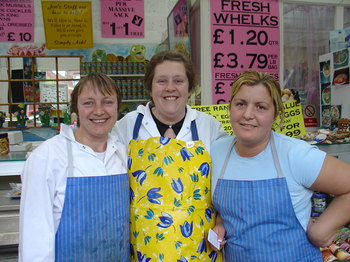
The ladies of Joe's Fish Net
This last week I was in Newcastle to meet up with the old and new folks from Dott 07 (Designs of the Time). As part of our getting aquainted with the area we were asked to do some directed wandering and meet some people outside of Newcastle's shiny centre. I wandered into Joe's Fish Net, a family owned fish store in Byker and met owners Anica (pictured on the right) and her brother, Richard Grey.
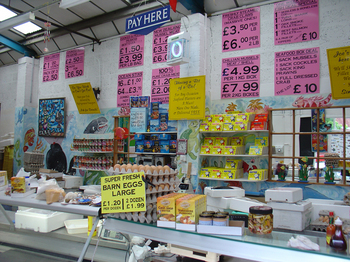
Joe's Fish Net shop interior
Although I arrived during closing time, the entire place was under suds and chatter. Both Richard and Anica were happy to talk about the fish biz once I assured them I wasn't from Mark & Spencers or Tescos and therefore about to steal their shop location. Richard and I talked about the effectively extinct cod and he gave me an industry publication titled Fish Update which ended up being completely interesting. Anica talked about the new line of prepared fish dinners that she is about to launch and about how to publish an electronic cookbook. I forgot the names of the other ladies in the shop, maybe they'll see this and let me know?
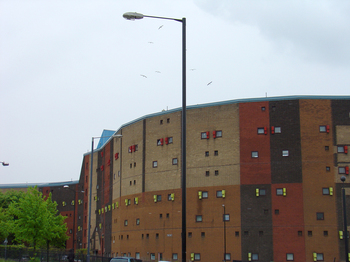
Architect Ralph Erskine's Byker wall
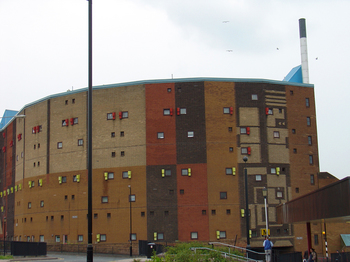
continuation of Byker Wall - beautiful brickwork
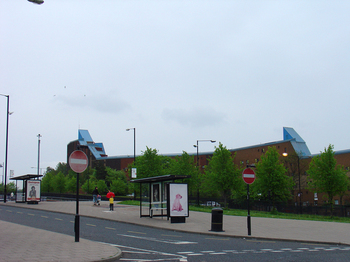
street scene in front of Byker Wall with Dutch beer ad somehow communicating to the reader to 'relax!' and a poster ad of a puppy
- electronic version of FishUpdate
- link to earlier Mark Kurlansky culiblog entry
- Wikipedia on Newcastle Upon Tyne
- Aerial view of Ralph Erskine's Byker Redevelopment
- Byker Redevelopment
Joe's Fish Net
9 Denmark Street
Newcastle upon Tyne
Tyne and Wear
NE6 2XF
Posted by debra at 11:18 PM | Comments (1) | post to del.icio.us
If you like fresh leafy greens and pork, you're going to love kruudmoes
May 14, 2006
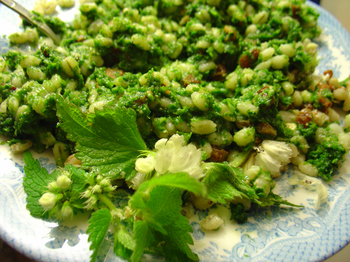
First impression: I may have taken an overly Californian approach to making kruudmoes this time, but although I should probably increase the gooeyness to make it just the way the natives do, kruudmoes is just crazy delicious.
If you're like me and:
- love to chomp away on all sorts of leafy greens, the weedier the better,
- adore all things pork,
- can't get enough of cultured milk products,
- are nostalgic about barley,
Dutch crude mousse is going to blow your mind.
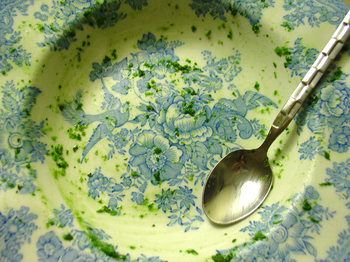
Normally I don't eat with a spoon, let alone a teaspoon. But I was tasting the oats and the greens mixture and became so enthusiastic that I couldn't even stop to set myself up with some sticks.
Posted by debra at 10:31 PM | Comments (0) | post to del.icio.us
Dead nettle
crude mousse for dinner
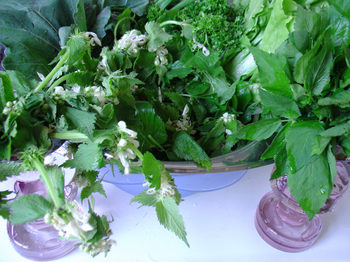
Kruudmoes leafy green selection from 9 o'clock: white deadnettle (dovenetel), kohlrabi leaves, spring onions, curly leaf parsley, chicory and ground elder (zevenblad).
Ten days before the Here as the Centre of the World dinner and I'm busy testing traditional recipes from Overijssel for the main course. I have decided on a Twentse Kruudmoes, which translates roughly into herb mousse but is in fact a leafy green and pearl barley gruel. Since I wasn't born in the Middle Ages and am therefore not a huge fan of eating green and glutinous slime, I'm thinking more along the lines of an herbacious and chlorophyl rich, pork-spiked barley risotto. Place the dutch oven with the boiling barley in your Oma's hay box with some pork fatback, raisins and buttermilk. Stir in the sauce vert at the last minute, and it's locative food from the Dutch Middle East.
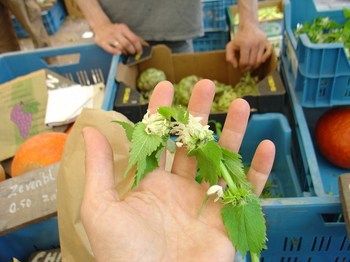
The myriad of kruudmoes recipes offer no consensus as to which greens to use, in the spirit of a true 'end of hungry gap' recipe. Yesterday I was thrilled to find dovenetel at the farmer's market. For English speakers and Latin-lovers, that's white deadnettle and lamium respectively, a plant wholly unrelated to stinging nettle, thus 'deadened', and the vernacular blooms before our very eyes. The flower and leaf taste of snow peas with an afterthought of hemp. The flower markings look like two ants sucking nectar side by side.
- White Deadnettle at Wikipedia
- Ground elder at the English Wikipedia
- A proper herbarium
- Dovenetel at the Dutch Wikipedia
Pity, but these recipes for kruudmoes are all in Dutch. When I have settled upon a recipe, I will publish it here but will not guarantee its authenticity, because I see my life as one big mission to eliminate overcooked leafy greens and slimey food.
- The pan-cultural kitchen
- Dutch recipes - click on kruudmoes
- Official locative cuisine
- Wikipedia loves kruudmoes
- Regional recipes from Overijssel
If you can't get enough of those hilarious Dutch weblogs, you'll love the following rough text about kruudmoes by Ilja Gort (Als Gort in Frankrijk and met Gort de Boer Op).
Please read more... "Dead nettle
crude mousse for dinner"
Posted by debra at 07:29 PM | Comments (0) | post to del.icio.us
The vertical
kitchen garden
May 12, 2006
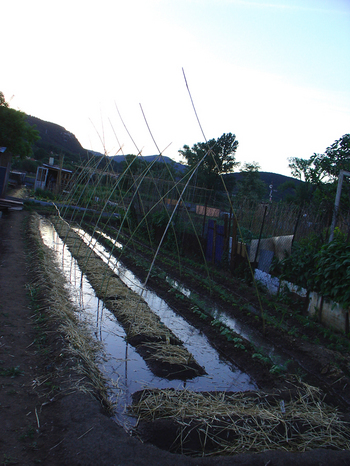
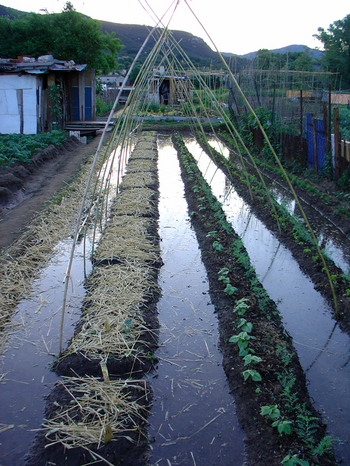
Spring planting is finished but before returning to the Polar Circle, I took this image of the bamboo framework for my vertical gardening concept. The plan is to train the wandering plants (melons, gourds, squash) to grow up the wide end of the frame, allowing them optimum sunlight, saving roaming space in the garden and eventually providing a tunnel of dappled light to walk through or linger in on hot August afternoons. An added benefit will be that my hanging calabas will grow with straight necks.
On the 'short end of the stick' side, morning glory will wind its way up the poles and produce blue and purple flowers. If everything goes according to plan (!) there will be yellow flowering plants climbing up the 'wide end' of the framework (left - in these images) and purple/blue flowering plants on the 'short end of the stick' side.
This idea is inspired by the Dutch architects MVRDV who also write about vertical farming in their book on density, KM3. I know, I know, they would never favour such vernacular materials or style.
Posted by debra at 10:14 AM | Comments (2) | post to del.icio.us
Kitchen garden inventory
May 10, 2006
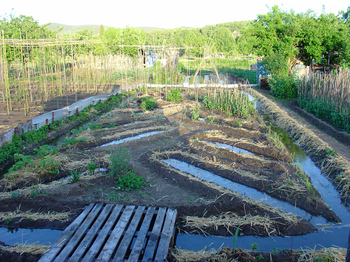
What is intensely boring to one person can be rivetting to another. Case in point: my kitchen garden inventory as of the 10th of May 2006: Upper Garden
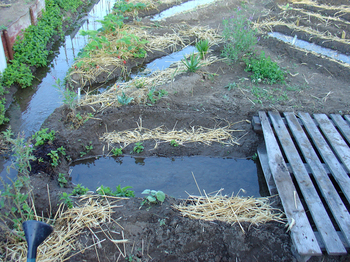
Row 0 l: (up) sage, cali poppy, silver dollar, rocket, (down) opal basil
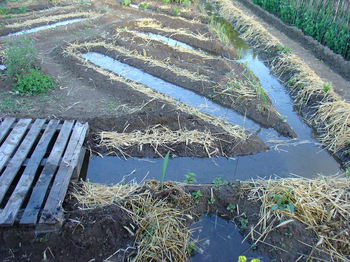
Row 0 r: (down) basil, (down) opal basil
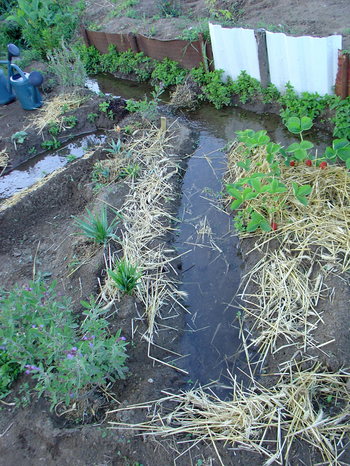
Row 1l: (up) sage, fennel, various bulbs rainbow chard, sage, (down) strawberries, delphinia, rainbow chard, bulbs
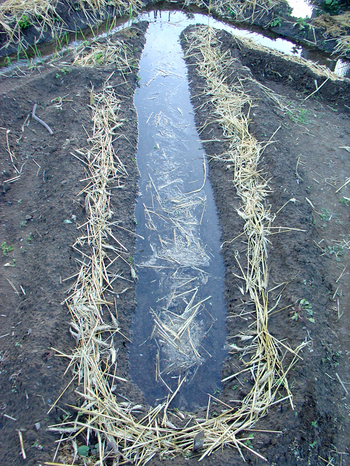
Row 1r: (up) fennel, red kale, purple cauliflower, purple kohlrabi, (down) silverdollar plant, red cabbage, brock calabria, violet cauliflower
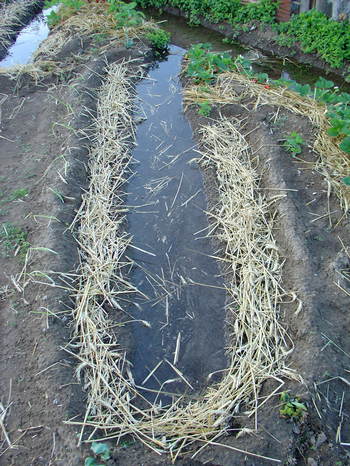
Row 2l: (up) strawberries, onions (x2) coreander, marigold, tulips, dill, (down) strawberries, shallots, purple haze carrots
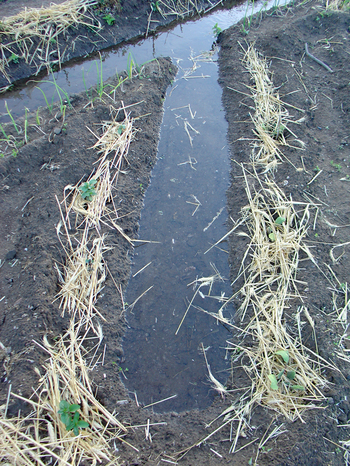
Row 2r: (up) purple shiso, borage x 3, amaranth, (down) bergamot x 4, onions
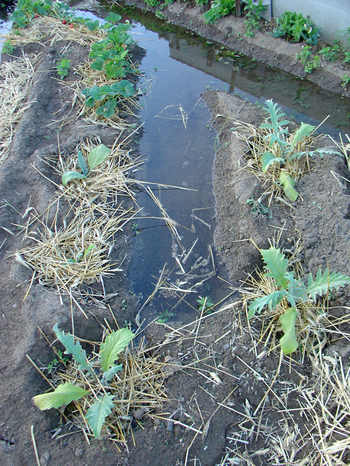
Row 3l: (up) strawberries, choke early and purple, choke late, (down) choke late
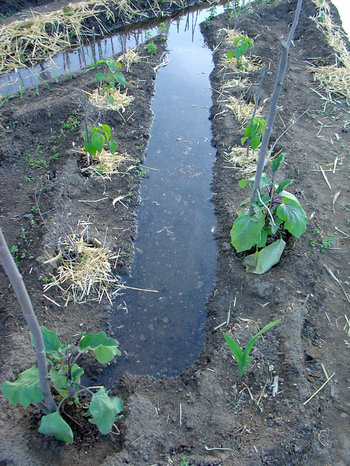
Row 3r: (up) jalapeño, paprika, jalapeño, paprika, aubergine, gladiola, marigold, aubergine, (down) jalapeño paprika, paprika, jalapeño, onions
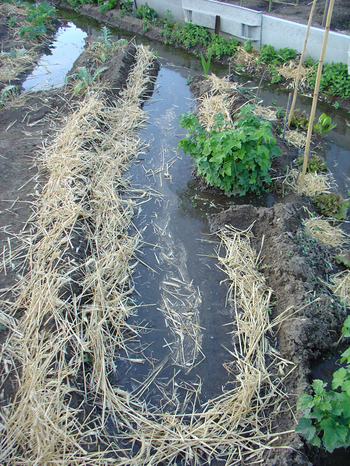
Row 4l: (up) opal basil, mizuna, amaranth, (down) opal basil, mizuna, red berry bush, mizuna
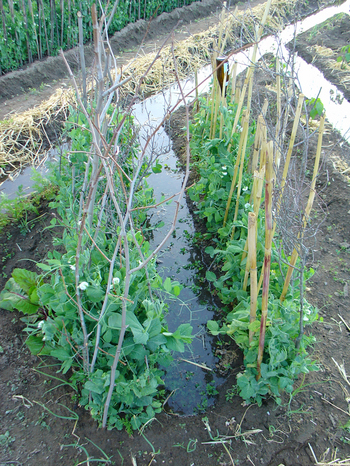
Row 4r: (up) mangetout peas, onions, (down) mangetout peas, onions, carrots (made a mistake because onions and peas don't go together supposedly)
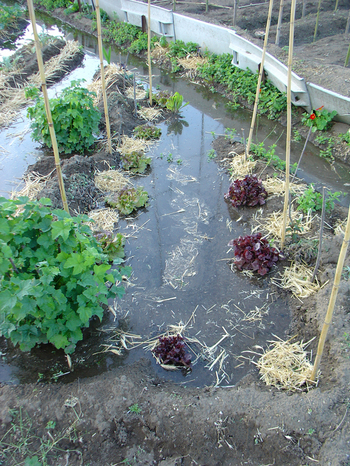
Row 5l: (up) 2 x cherry tomatoes, 4 x ondine cornu, (down) 4 x roma, 1 x cherry tomato
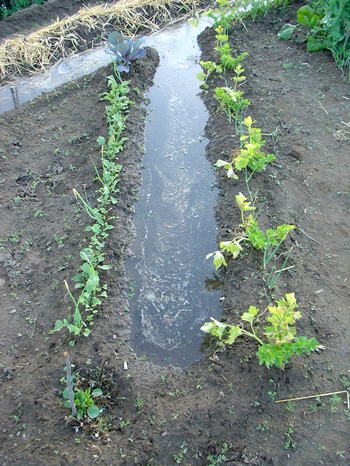
Row 5r: (up) celery, onions, dahlia, (down) onions, radishes, red cabbage, beets
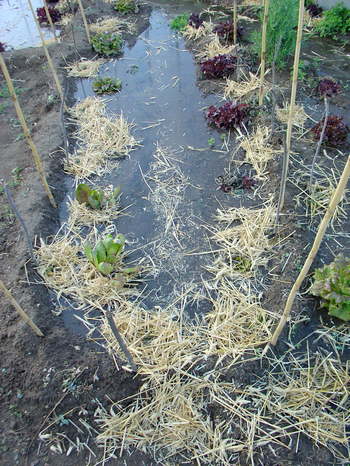
Row 6l: (up) moneymaker x 4, cherry tomato, (down) 4 x ondine cornu, cherry tomato
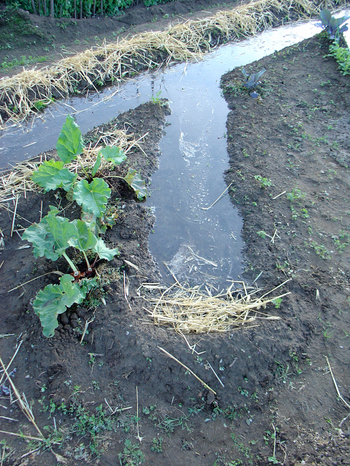
Row 6r: (up) red cabbage, beets, marigold, fennel, (down) rhubarb x 2, beets (detroit, candycane, egyptian flat), fennel, horseradish, beets
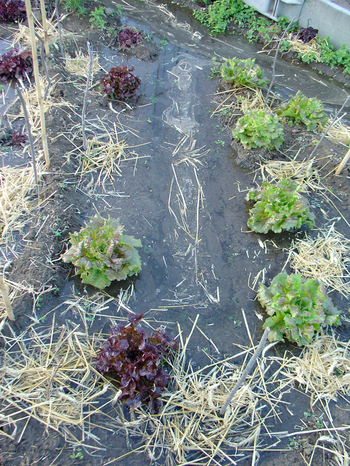
Row 7l: (up) 3 x roma, cherry tomato, (down) 3 x moneymaker, opal and green basil, purple and green shiso on borders of tomato rows 5-7
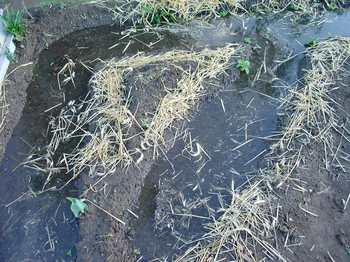
Row 7r: (up) horseradish (x4), beets, (down) brassica corner, bruxelles sprouts, romanesca, beets, chervil, fennel
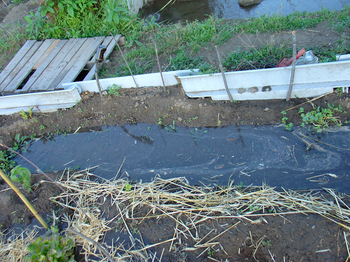
Row 8: (up) beets, genovese basil, lupines, (down) coreander, lupines, gladiolas, fennel, cali poppy, fenugreek
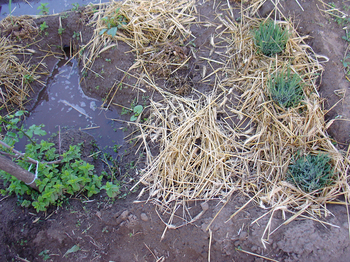
In front of upper kitchen garden shed right: fig, mint, peppermint, ginger, marigolds, calendula, iris germanica (please grow you dang thing!), dahlias, lupines, lavender.
Perimeter Upper Garden left: mint, mint and more mint, peppermint, lupines, glads, delphinia, cali poppies, shiso red and green, basil green and purple
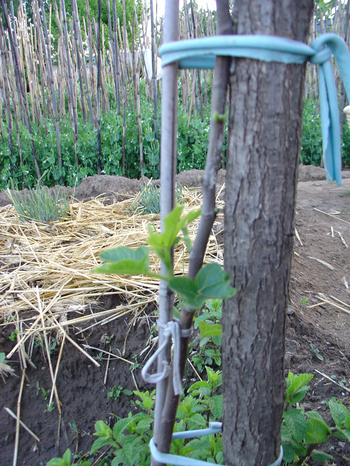
Lower Kitchen Garden:
Row 1: sunflowers, dill, soy
Row 2: soy, dill, chickpea
Row 3: adzuki, dill, red night kidney (at pole: morning glory)
Raised beds from upper to lower:
Bed 1: marigold, gold rush yellow courgette
Bed 2: pickling cucumbers
Bed 3: luffah
Bed 4: pumpkin
Bed 5: spaghetti squash
Bed 6: calabas gourds
Bed 7: galia melons
Bed 8: cantaloup
Bed 9: watermelon
Bed 10: poblano chilies, marconi peppers
Bottom 2 rows: golden bantam corn
Perimeter: amaranth, buckwheat and temporarily alfalfa and buckwheat were compulsively planted on the beds to change my weed environment to these weeds.
Posted by debra at 09:07 AM | Comments (0) | post to del.icio.us
Wild tomatoes
for guests
May 07, 2006
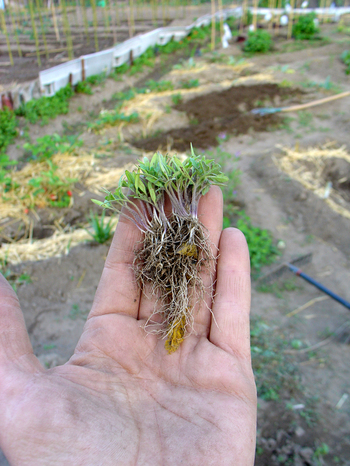
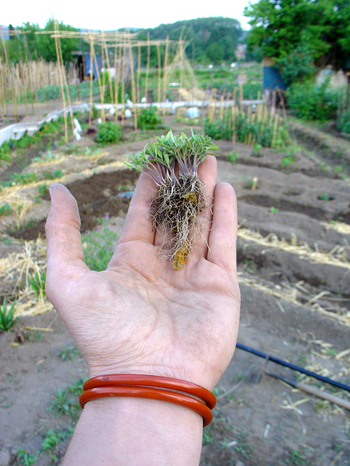
Here's a clump of wild tomato seedlings with the exploded tomato skin still attached to the roots like a busted balloon. They're popping up everywhere in my kitchen garden, and to think I wasted all that time fussing with the foetuses and a propagator when they can grow themselves all by their lonesome. From now on I'm just going to let a few tomatoes dry on the vine and let them dump themselves on the ground. I may just be getting the hang of the Masanobu Fukuoka style of gardening!
These are currant tomatoes, a wild variety that produced zillions of little berry sized fruit and which pretty much scattered itself throughout my kitchen garden end of season. This is the one I use as my 'guest tomato', planted at the ends of the rows so that visitors can have something to nibble on and I can put lingerers to work on an obsessive compulsive harvesting task.
- Wikipedia on Masanobu Fukuoka
- More Masanobu Fukuoka on Seedballs
- Even more Masanobu Fukuoka on Organic dot com
Posted by debra at 10:02 AM | Comments (0) | post to del.icio.us
Note to self: search for suitable acronyms
May 06, 2006
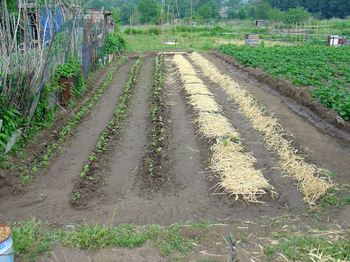
CCLPSGGCWPMC or backwards, CMPWCGGSPLCC. In the last row (covered in hay): courgette (gold rush), cukes, luffah, pumpkin, spaghetti squash, gourds, galia melon, cantaloup, watermelon, poblano pepper, marconi pepper, corn. At this stage in development, I'm having trouble telling the gourdy, cukey, melony plants apart and even had to label them. I prefer to keep notes in a muddy garden notebook to labeling a plant, the idea being that the dangling cucumber should tell me the plant is a cucumber. But in the meantime, the plants are babies, and like all babies, they sort of look alike.
On the 'right bank': amaranth, buckwhat, alfalfa. ABA.
In the 'bean rows': sunflowers, dill, soy, soy, adzuki, chickpeas, red night kidney. No acronym necessary since the plants are so different looking.
CoCuLuPu
SpaGoGa
CanWatPoMaCo
Grow, You thangs!
Posted by debra at 11:53 AM | Comments (0) | post to del.icio.us
Pest control
May 05, 2006
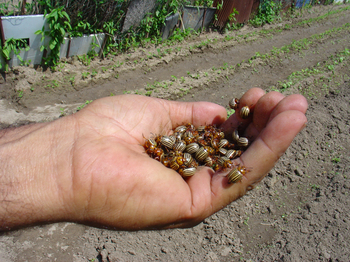
The scales are tipping at the allottments, the organic gardeners are in the majority! Although our numbers are too small to make a real statistic, the demographic of the organic group is thoroughly mixed. In the image above, Sidi AlGouche, not exactly an organic gardener, has decided not to spray his potatoes to get rid of these bugs. Instead he spends an hour each day picking the potato beetles off by hand and indulging in a fair amount of tri-lingual cursing. Afternoons Sidi AlGouche stops cursing and puts his daughter Aqima (9) to work. Aqima is too much of a pistol to spend her afternoons bug-picking and usually puts in a solid twenty minutes before wandering off to hunt frogs with the kids across the waterway.
Posted by debra at 11:39 AM | Comments (2) | post to del.icio.us
First strawberries of the year!
May 04, 2006
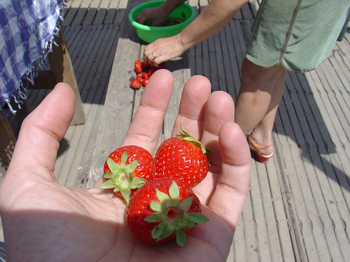
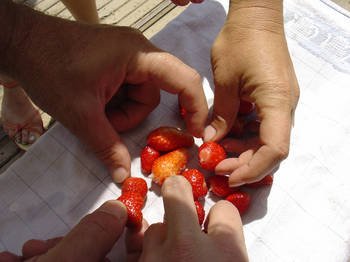
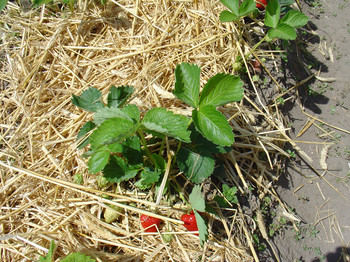
The strawberry nearest to the camera is the first strawberry that I've grown. What a marvel. Before I tasted strawberries from the garden, I couldn't understand what exactly was so special about strawberries. Now I know I needto grow twice as many and am eager to try different varieties. The native garrigues are producing well considering that I ignore them most of the time. I'm starting to think that my lack of presence in this commuter garden is a good thing.
Posted by debra at 01:58 PM | Comments (5) | post to del.icio.us
My cover crop
slash green manure
experiment is a success
May 03, 2006
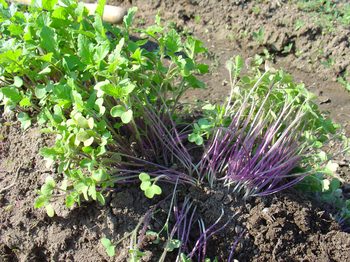
Mustard microgreens, about to be turned into green manure
This January in an experiment in producing biomass, maintaining good soil condition and weed mitigatation in my lower garden, I planted green manure cover crops. Of course nothing sprouted because in January the ground is far too cold and you'd have to be a crazy woman who has just read fifteen articles about the benefits of green manures to do such a thing. But in March I re-sowed the same crops again and this time the seeds sprouted to the acronym AMBRASSS, rhymes with je t'embrace, alfalfa, mustard, buckwheat, red night kidney, adzuki, soy, soy, soy).
This lower garder is going to be my workaday garden for plants that take up space, need verticality and like to roam. Yesterday I turned the alfalfa, mustard and buckwheat rows under as green manure for the summer's seed beds. I am thrilled to bits with the results of the covercrop/green manure experiment. The plants yielded very long roots and massive hairy rootballs, all of which are going to rot forthwith and produce a healthy subterranean microbial culture upon which the summer gourds and melons will thrive. Whilst turning the soil I came across zillions of earthworms, dark and fat. Am I insane for not really liking the rototiller, turquoise though she is?
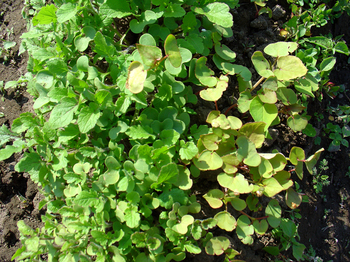
Mustard and buckwheat, sadly no image of the alfalfa
The goal of the first phase of this experiment (produce biomass to introduce organic material into the soil) is an absolute success. The goal of the second phase of this experiment is to see how the green manure performs. Performs in comparison to what, is the question.
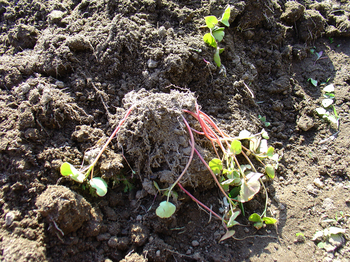
A clump of buckwheat showing how much rootmass it has produced, pretty red-stemmed and bronze coloured foliage
Reality check: It probably goes without saying that I have not exactly applied the scientific method to this 'experiment' and should probably call it the 'Hmm, wonder if this works' method. Unfortunately I'm emotionally attached to the green manures and cover crops concept and have already decided to get good at doing things this way, but I've observed (unfortch) that the array of native 'weeds' in combination seem to produce as much biomass as the alfalfa, mustard and buckwheat mix, although I don't know what they do to the soil condition. Considering that the soil condition already looked good before starting, I have no reason to believe that the weeds deplete the nutrients, but of course I'll never know because I didn't leave a control section.
And obviously, because I can even write about the native weeds shows that the covercrops weren't really that good at mitigating weeds - although there were LESS weeds in the rows than on the banks of the rows. I'm more of an eyeballer than a counter.
Come autumn, the proper season for planting the green manures, I'll try planting over the entire allottment to see if this helps with weed mitigation. In fact, I've pretty much decided that throughout the summer I'm just going to go around throwing alfalfa, mustard and buckwheat seeds at everything.
Whatevs. I'm married to the idea that these plants will be my new weeds and I even had a dream last night that after years of planting the cover crops, I had increased the biomass on my allottments so much that my gardens were one metre higher than everyone elses.
Posted by debra at 11:05 AM | Comments (2) | post to del.icio.us
Kitchen garden before
Ice Saints
May 02, 2006
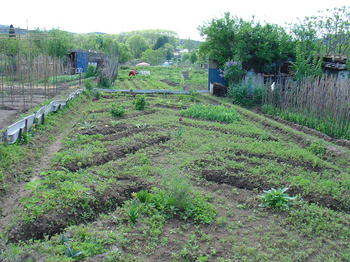
My kitchen garden on the 27th of April
Some people grow up with socialist folk songs, others grow up with Catholic weather knowledge. Until now, I'd never even heard about Ice Saints, but that was before I had a kitchen garden. Ice Saints refers to the 11th, 12th, and 13th May, the feast days of St. Mamertus, St. Pancras, and St. Gervais, purportedly the cut-off date for night frost. And the date after which you can start wearing cut-offs when you potter about with summer crops in the potager.
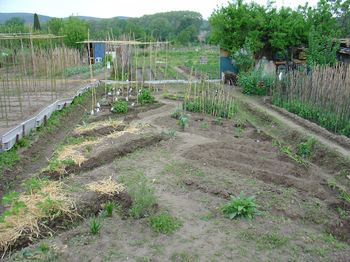
My kitchen garden on the 1st of May
Oddly, these May dates are the same from the Netherlands, way up in the Polar Circle, all the way down to Occitania. The cut-off town is Beziers, 100km from here, where its warmer and they have different days, different saints and they can grow meyer lemons outside. No cut-offs though.
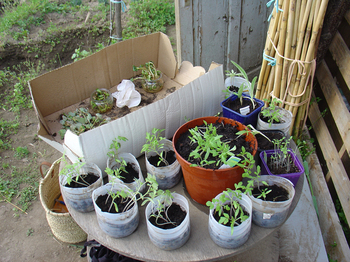
Tomato foetuses bracing themselves for a rigourous session of acclimatisation
I'm not having any of it, and even though it seems like Occitania lost a month of growing season this year due to the cooling effects of global warming, my sunflowers and lupines are growing visibly each day. But the men of the kitchen gardens are laughing at us Ladies-who-put-our-tomato-foetuses-out-early. Thursday, the gents will really split a gut watching me sow cantaloup, galia melon, cukes, luffah, gourds, pumpkins, spaghetti squash, courgette and watermelon into the bare naked ground. As a tribute to the Saints I'll repurpose some plastic ice cream containers into little hot houses. See ya later Propagator.
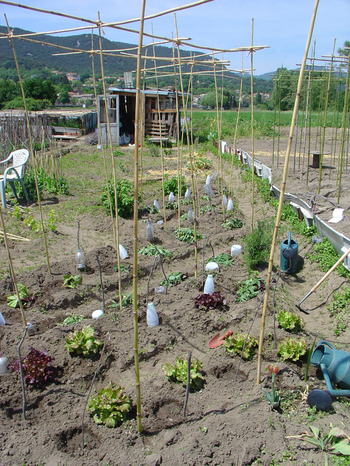
Lettuce and tomato section sorted
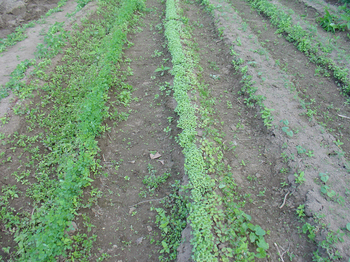
Covercrops before being plowed into seed beds
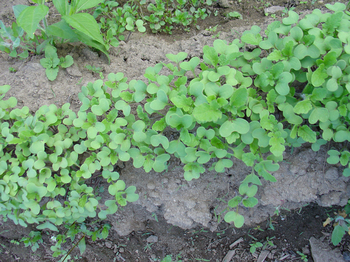
Mustard microsalad
- Dutch language Wikipedia article on Ice Saints
- English language snippet about Ice Saints. Odd, no Wikipedia article. Guess it's up to me to at least translate for the free encyclopedia!
- Wikipedia (great article!) on Ice Saints in French. Just 100 kilometres from here there are different Ice Saints because the cut-off for night frost is two weeks earlier! Consolation for the fact that the folks living below Beziers can grow lemons is that they have a drier climate and don't have clean river water flowing into their kitchen gardens.
Posted by debra at 01:49 PM | Comments (8) | post to del.icio.us


