A midsummer garden dinner at Marlein's
June 20, 2006
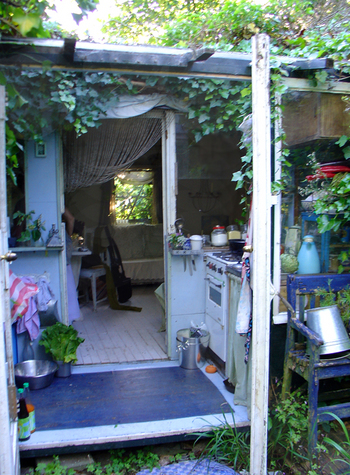 Marlein's tuinhuis rhymes with town house but means garden house or cottage
On an island between the Amsterdam-Rhine Canal and the IJ inland shipping lands, sandwiched between harbours, dubious car re-painting garages and tucked under a freeway flyover, there is a hidden paradise that I was totally unaware existed until last Saturday, when Marlein invited me to dinner at her garden house. It hadn't occured to me that in the midst of all this bustle and crud that there could be a place of such lush beauty and serenity, a place where nature takes over and you can't imagine or even glimpse anything but the burgeoning surrounds that envelop you.
Marlein's tuinhuis rhymes with town house but means garden house or cottage
On an island between the Amsterdam-Rhine Canal and the IJ inland shipping lands, sandwiched between harbours, dubious car re-painting garages and tucked under a freeway flyover, there is a hidden paradise that I was totally unaware existed until last Saturday, when Marlein invited me to dinner at her garden house. It hadn't occured to me that in the midst of all this bustle and crud that there could be a place of such lush beauty and serenity, a place where nature takes over and you can't imagine or even glimpse anything but the burgeoning surrounds that envelop you.
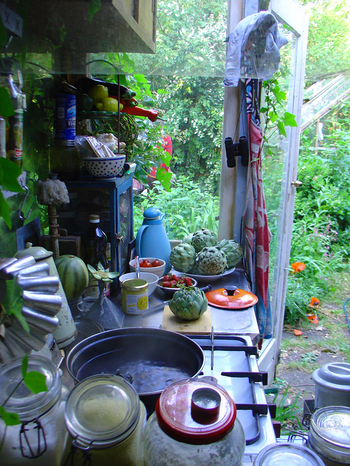 View from inside the indoor-outdoor kitchen to the front garden
Marlein, Joost and I lazily drank mint tea with saffron sugar crystals, chitchatting, enjoying the evening light. Magically Marlein produced dinner and we supped on greens and succulent things, sort of lowish on the food chain.
View from inside the indoor-outdoor kitchen to the front garden
Marlein, Joost and I lazily drank mint tea with saffron sugar crystals, chitchatting, enjoying the evening light. Magically Marlein produced dinner and we supped on greens and succulent things, sort of lowish on the food chain.
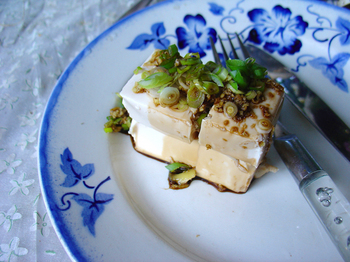 Silken tofu with spring onions and drizzled with nama shoyu is an elegant start to our dinner
It stays light until almost eleven!
Silken tofu with spring onions and drizzled with nama shoyu is an elegant start to our dinner
It stays light until almost eleven!
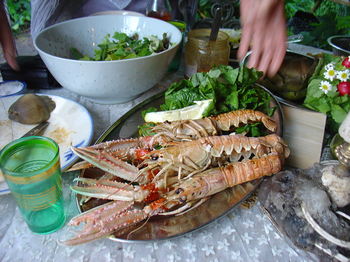 When the water insects arrived, we sucked them inside out.
And when it got too dark and a little bit chilly, we retired to the great indoors for a dessert of elder flower tempura dusted with powdered sugar, chocolate, dates and Pakistani burfi.
When the water insects arrived, we sucked them inside out.
And when it got too dark and a little bit chilly, we retired to the great indoors for a dessert of elder flower tempura dusted with powdered sugar, chocolate, dates and Pakistani burfi.
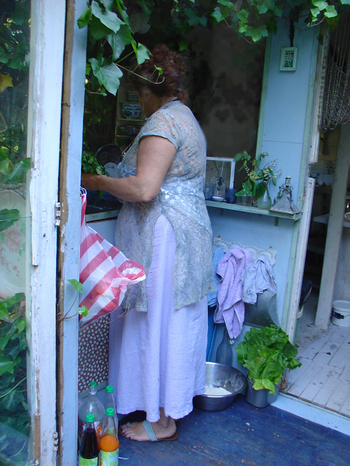 This sort of garden house is typical of the Dutch style allotments, although usually these locations have long socialist histories and are highly regulated, Marlein's garden is in a non-sanctioned area, and unfortunately one that will be devoured by a land development project starting in 2008. Pick your battles, there two full summers to enjoy before Marlein and her garden neighbours find the next fabulous and secret place.
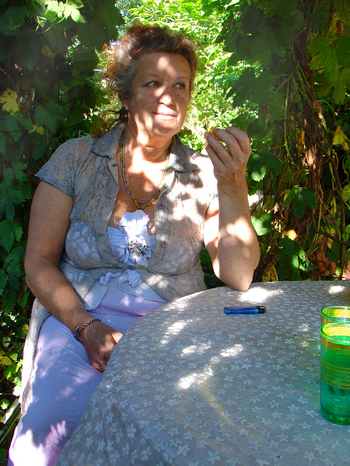 Lady Marlein
Posted by debra at 01:24 PM | post to del.icio.us
Let farmers be bygones
June 17, 2006
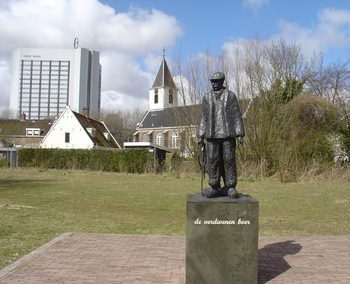
Let bygones be farmers? On the other side of my neighbourhood park there is a monument in honour of the 'lost farmer', farmers lost to change. The text on the back of the pedestal says, The Bygone Farmer by artist Henk Gomes commemorates the farmers that for thousands of years lived and worked in the fens to the west of Amsterdam's city limits. Until the 1950's this was the border between city and the country. In the 2nd half of the 20th century this border was pushed back to the peripheral waterway beyond the Haarlemmermeer.
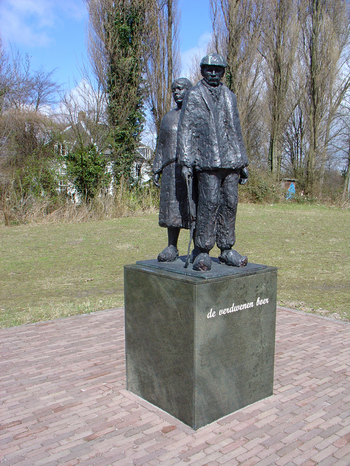
The placement of this statue has been made possible by funding from private donations and with donations from the Amsterdam borrough of Bos en Lommer, the Amsterdam Foundation for Visual Arts, the Amsterdam Rabobank and also the Foundation for the Bygone Farmer.
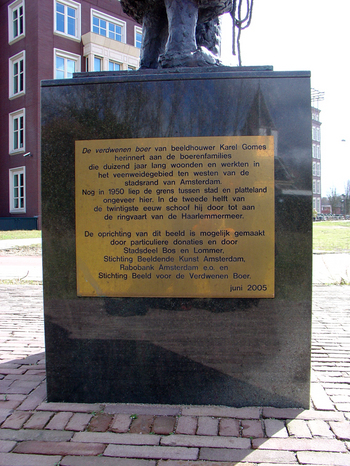
The task of translating the Dutch verb verdwenen has been preventing me from writing this entry since I took these pictures back in April. Verdwenen can mean a lot of things, and none of which sound particularly as poetic in English as Verdwenen Boer does in Dutch.
Lost,
extinct,
vanished,
disappeared.
They used to be here.
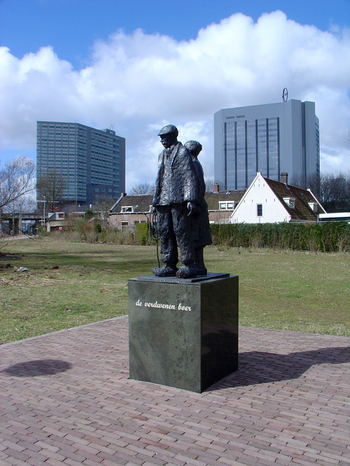
Nice that the artist included the boerin in the actual sculpture, although he left her out of the title. In Dutch, the female farmer has her own word. Maybe Gomes was using the term boer as a general term.
Speaking of Dutch public art commissions, check out the iron line drawing on top of the tax building.
Posted by debra at 06:48 AM | post to del.icio.us
Juice fasting recipes, start with forgotten vegetables and then forget them again
June 13, 2006
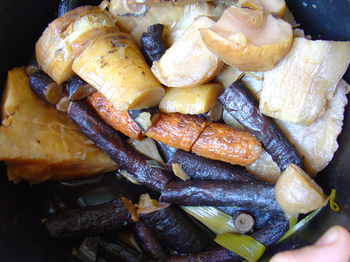
I'm the kind of gal that likes to pad her New Year's resolutions with seemingly achievable ambitions like, 'Improve handwriting' and 'Find ways to enjoy ancient root vegetables', but 5 months into the year, I haven't exactly achieved success in integrating parsnips and burdock into my winter diet in any significant way. When I returned home from Saturday's farmers' market loaded with fresh ingredients for a 5-day juice fast, I was confronted with a fridge half-full with ancient burdock, celeriac, carrots, parsnips, and a window sill of dried apples. The produce was definitely local, but in the course of some hecticity the past few months, had inadvertently become non-seasonal. I had created forgotten vegetables.
In the spirit of 'once a year whether you need it or not', I set to thoroughly cleaning out the fridge to make room for the new arrivals. Oddly, the pile of veg that didn't make the cut consisted predominantly of root veg, species hardy enough to survive extreme neglect. Not wanting to waste not, I gave the ancient grub a scrub and placed it in a large pot of water a'simmering over a low flame. Re-visiting the theme of forgotten vegetables, I simply forgot these vegetables anew. When every now and again I happened to remember them in the course of the next day, I just added some water or annointed them with a pinch of sea salt. I didn't even stir.
Yesterday I poured off the liquid, which left to its own devices had transformed itself into an aromatic vegetable bouillon, so delicious that VN and I felt positively blessed drinking it chilled from gold-rimmed shot glasses. Although I am not certain as to the nutritional value of this drink, I am certain that the initial slow-aging of the vegetables and the slow-drying of the apples is the reason that it ended up so flavourful. If you aren't forgetful, you could probably achieve this self-same result with fresh vegetables and a dehydrator, reducing the simmering time to boot. But I prefer to forget and let the soup just make itself.
Forgotten vegetable bouillon
2 kilos of mixed root vegetables; celeriac, parsnips, burdock, carrot)
4 wrinkly old apples, not rotten, just wrinkly and old
1 leek, very old but not rotten
big 'ol pinch of the sea salt
water straight out of the tap
Give the veg and fruit a good scrubbing. If it has been in the fridge for a few months, it really needs it. By the by, leaving the dirt on root veg (and even storing it in sand) keeps it fresher longer. That said, it's the optimism of washing off the dirt that caused these vegetables to dry so perfectly in the fridge over several months time that they retained all of their sugars.
Cut the root veg and apples with skin an all in a large pot filled to the brim with cold water and a big pinch of sea salt. Put the flame on low and if you must, cover the pot no more than half-way. Every four hours check to see what's going on, you may need to add water if you've evaporated too much. After at least two times of adding water and letting simmer, turn off the flame and let the liquid cool, lid off. Pour off the bouillon and use it as vegetable stock or as an ingredient in a root vegetable stock cocktail.
Posted by debra at 11:08 AM | post to del.icio.us
CPULs
when bad acronyms
happen to good people
June 09, 2006
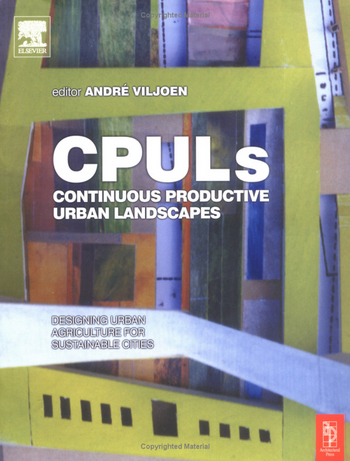
It's pronounced 'SEE, PULSE' and stands for Continous Productive Urban Landscapes. Architects Viljoen, Bohn and Howe's postively radical notion of combining productive urban landscapes with continuous landscapes, proposes a new urban design strategy that would change the appearance of contemporary cities towards an unprecedented naturalism. Think urban agriculture, allotment gardens, increased biodiversity, decreased carbon emissions and strategically connected green space - and you will start to get an idea of what the authors are suggesting. Although this is in no way within the scope of the book, never have I encountered a more holistic approach to urban planning that so thoroughly takes into account our imminent plunge into energy descent and the extreme effect that this will have on our food supply.
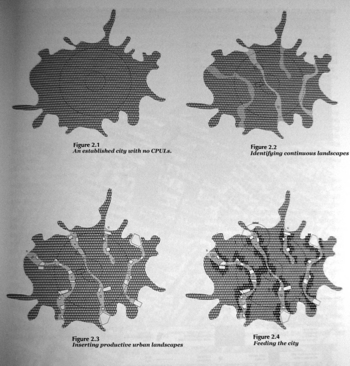
Diagrams showing a projected development of CPULs © Bohn & Viljoen Architects, reformatted for culiblog and used entirely without permission
Despite sporting a singularly unsexy title and a graphic design utterly devoid of charm, CPULs is a compelling vision for urban planners and (landscape) architects. The book is loaded with truly useful facts and case studies yet somehow remains a rivetting read for layfolk, comme moi. The authors were wise enough to begin the book with a succinct glossary defining all of the concepts so that within five pages you're already an adept at juggling terminology like vertical and horizontal intensification and you know the difference between an organiponico and a heurto intensivo.
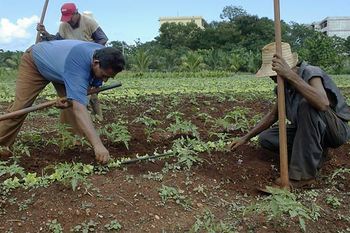
According to people who are in a position to compare, CPULs offers a rich documentation of UK allotment history and vivid reports of successful urban agriculture in contemporary Cuba, one of the few countries to have yet experienced peak oil. In 1990 when Cuba stopped receiving cheap juice from the Mothership and subsequently lost its largest client for agricultural produce, Havana citizens suddenly found themselves without access to sufficient food as expressed in 30% fewer calories in their diet! Instead of engaging in some futile rioting, they took up gardening en masse, and by gardening, I mean organic gardening. Later the government jumped on the bandwagon and started facilitating the urban agricultural effort in the form of responsible planning and infrastructure development. Presently Cuba is considered to be a living laboratory of how small urban farms and gardening collectives can successfully provide a significant portion of the urban food supply in spite of energy descent. Listen up, everybody! The CPULs authors were enlightened enough to note that a population accustomed to collectivism is more likely to be successful at community projects and that Northern European urban agricultural initiatives of the future will need to develop a native form to ensure their success.
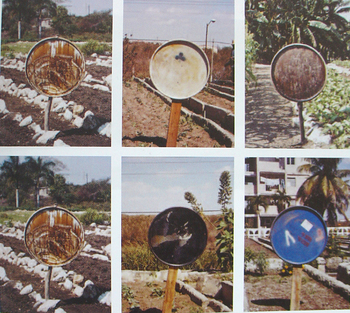
Oil drum lids used as markers in Havana organiponicos. Photos by Tom Phillips from CPULs used entirely without permission
CPULs' authors articulate the benefits and obstacles to their proposal and offer cogent strategies for creating city land use policy in which urban green and brown are treated as productive space, considering the unbuilt as an event of equal intensity as the built. A vision of a thriving CPULs in London 2045 provides a powerful scenario that I can imagine myself being a part of at any stage in my life. This is something I would not characterise as a common feature in most urban planning. In CPULs city planning the well-being of people is a central and distinguishing factor. In fact, its completely seductive.
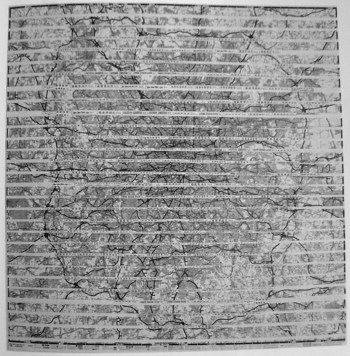
A map of London expanded to accomodate mini- and SUPER-market gardens, from a 1998 study © Viljoen and Bohn Architects, photographed from the book and used entirely without permission
Robert Hopkins from Transition Culture weblog notes, 'It is only in the last 30 or so years that we have perfected the art of creating totally useless landscapes. New industrial estates and business parks typify this, planted with 'low maintenance' shrubs, specifically bred to be entirely unproductive.' Bohn and Viljoen point out that though European cities have planned for a variety of approaches to open space including urban parks, urban river fronts, urban squares, urban stages, urban forests and urban beaches, there are as yet no urban fields. 'Living and growing food in the contemporary urban space, CPULs could formally be similar to urban parks.' I am inspired by the notion that landscape architecture could be pivotal in designing for a future in which peak oil will have tremendous impact on the urban food supply.
As someone who writes about food and culture and as an an art and design educator, I cannot recommend this book highly enough. I hope that its concepts are embraced by those who are in a position to implement urban planning of this nature. The notion of CPULS deserves to feature prominently in design and architecture curricula, informing a new generation of people designing our cities and potentially our well-being through our access to healthy food.
CPULs do not yet exist.
In type, they will be new,
in type they will be productive.
See, pulse, with a silent meow at the end.
- Continuous Productive Urban Landscapes. Designing Urban Agriculture for Sustainable Cities. Andre Viljoen (ed) 2005. Architectural Press
- Biography of Andre Viljoen at the Royal Institute of British Architects website
- Robert Hopkins' brilliant Transition Culture review of CPULs. The review also questions why Viljoen doesn't use the term permaculture when the ideas in this book are so clearly informed by it. Hopkins points out that THIS book is exactly where permaculture needs to be. Although CPULs author Graeme Sherriff addresses permaculture rather thoroughly in Chapter 22 (Permaculture and Prodcutive Urban Landscapes) I can imagine that editor Viljoen felt a need for a new definition (and therefore produced that unfortunate acronym) because the notion of permaculture does not specifically address urban planning and land use policy.
- Permaculture according to Wikipedia
- Permaculture according to CPULs authors - quoting Robert Hopkins!: 'Permaculture has evolved into a system for the conscious design of sustainable productive systems which integrate housing, people, plants, energy and water with sustainable financial and political structures.' (Robert Hopkins, 2000, p.203)
- CPULs according to wikipedia. Oh how odd, there is as of yet no entry.
- Energy descent
- James Howard Kunstler, author of the Long Emergency
- Eat the suburbs - an Energy Descent Primer
- Some of the more positive aspects of peak oil:
Healthier food
More active lifestyles
Greater self-reliance
A sense of connection to place and products
The re-emergence of local identity
An emphasis on quality over quantity
A means of overcoming addictive behaviours such as over-consumption - Permaculture Activist, the magazine - excellent read!
- Energy Descent Primer
- An MP3 of permaculture 'proponent' David Holmgren lecturing on permaculture and peak oil
- Robert Newman's History of Oil (stand-up comedy) on Google Video. Hilarious and not-so-hilarious at the same time.
Posted by debra at 01:51 PM | post to del.icio.us
Here as the Centre of the World, in terms of food
June 03, 2006
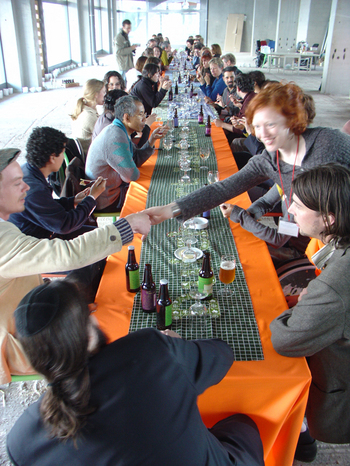
Here as the Centre of the World banquet with local food from Twente and Overijssel. Guests getting giggly on the bubbly.
A week and a half ago, my colleagues and I at the Dutch Art Institute (DAI), were in the throes of an international symposium on 'all things periferal' for artists and mediators. Illustrious guests from Overijssel and the 'rest of the world' were invited to discuss this (contemporary art) subject for two solid days in the Rijksmuseum Twenthe. Early in planning phase of this event, I decided that the symposium would be more coherent if, during the the event, we attempted to eat food grown and produced from within the province, a Twente tasting menu. In a huge gesture of over-confidence, I took upon myself the task of organising the symposium's food side, in particular a sit-down banquet for fifty, on the 23rd of May. All of the food for the banquet and incidental feedings would come from within the province of Overijssel, within a 60 kilometre radius of the event epicentre.
- Here as the Centre of the World Banquet Menu
- fork -local pickled beet with smoked herring, and strips of rhubarb
spoon - turnip green mash with goat cheese
knife - lumps of bread - Kruudmoes: barley, buttermilk and fatback porridge served with ground up local greens including: ground elder (zevenblad), white deadnettle (dovenetel), kohlrabi leaves, applemint, spearmint, peppermint, curly leaf parsley, beet greens, spinach, sorrel and 'Roman' chervil
- Hangop served with caramel sauce and berry coulis
- Wines from the Hof van Twente Winery
- Meibok, Witbier, Vrouwe van gramsbergen and Blond beers from the Mommeriete Brewery
Please read more... "Here as the Centre of the World, in terms of food"
Posted by debra at 02:35 PM | post to del.icio.us
Joe's Fish Net in Newcastle
May 21, 2006
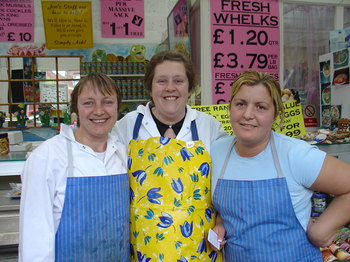
The ladies of Joe's Fish Net
This last week I was in Newcastle to meet up with the old and new folks from Dott 07 (Designs of the Time). As part of our getting aquainted with the area we were asked to do some directed wandering and meet some people outside of Newcastle's shiny centre. I wandered into Joe's Fish Net, a family owned fish store in Byker and met owners Anica (pictured on the right) and her brother, Richard Grey.
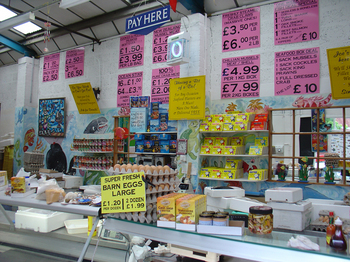
Joe's Fish Net shop interior
Although I arrived during closing time, the entire place was under suds and chatter. Both Richard and Anica were happy to talk about the fish biz once I assured them I wasn't from Mark & Spencers or Tescos and therefore about to steal their shop location. Richard and I talked about the effectively extinct cod and he gave me an industry publication titled Fish Update which ended up being completely interesting. Anica talked about the new line of prepared fish dinners that she is about to launch and about how to publish an electronic cookbook. I forgot the names of the other ladies in the shop, maybe they'll see this and let me know?
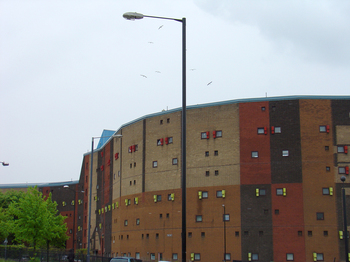
Architect Ralph Erskine's Byker wall
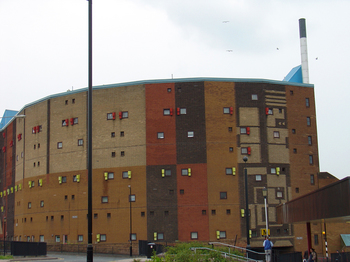
continuation of Byker Wall - beautiful brickwork
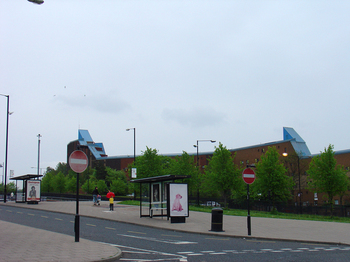
street scene in front of Byker Wall with Dutch beer ad somehow communicating to the reader to 'relax!' and a poster ad of a puppy
- electronic version of FishUpdate
- link to earlier Mark Kurlansky culiblog entry
- Wikipedia on Newcastle Upon Tyne
- Aerial view of Ralph Erskine's Byker Redevelopment
- Byker Redevelopment
Joe's Fish Net
9 Denmark Street
Newcastle upon Tyne
Tyne and Wear
NE6 2XF
Posted by debra at 11:18 PM | Comments (1) | post to del.icio.us
If you like fresh leafy greens and pork, you're going to love kruudmoes
May 14, 2006
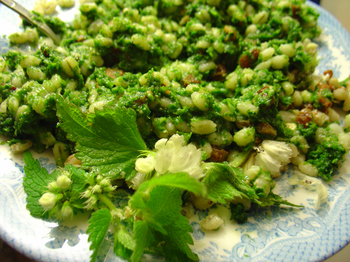
First impression: I may have taken an overly Californian approach to making kruudmoes this time, but although I should probably increase the gooeyness to make it just the way the natives do, kruudmoes is just crazy delicious.
If you're like me and:
- love to chomp away on all sorts of leafy greens, the weedier the better,
- adore all things pork,
- can't get enough of cultured milk products,
- are nostalgic about barley,
Dutch crude mousse is going to blow your mind.
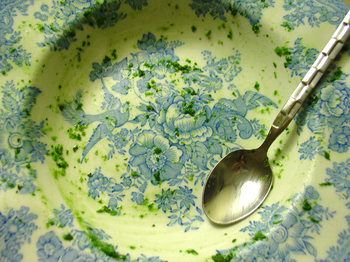
Normally I don't eat with a spoon, let alone a teaspoon. But I was tasting the oats and the greens mixture and became so enthusiastic that I couldn't even stop to set myself up with some sticks.
Posted by debra at 10:31 PM | Comments (0) | post to del.icio.us
Dead nettle
crude mousse for dinner
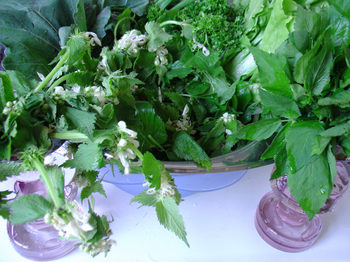
Kruudmoes leafy green selection from 9 o'clock: white deadnettle (dovenetel), kohlrabi leaves, spring onions, curly leaf parsley, chicory and ground elder (zevenblad).
Ten days before the Here as the Centre of the World dinner and I'm busy testing traditional recipes from Overijssel for the main course. I have decided on a Twentse Kruudmoes, which translates roughly into herb mousse but is in fact a leafy green and pearl barley gruel. Since I wasn't born in the Middle Ages and am therefore not a huge fan of eating green and glutinous slime, I'm thinking more along the lines of an herbacious and chlorophyl rich, pork-spiked barley risotto. Place the dutch oven with the boiling barley in your Oma's hay box with some pork fatback, raisins and buttermilk. Stir in the sauce vert at the last minute, and it's locative food from the Dutch Middle East.
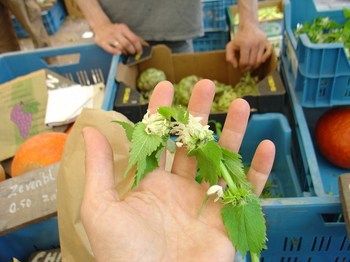
The myriad of kruudmoes recipes offer no consensus as to which greens to use, in the spirit of a true 'end of hungry gap' recipe. Yesterday I was thrilled to find dovenetel at the farmer's market. For English speakers and Latin-lovers, that's white deadnettle and lamium respectively, a plant wholly unrelated to stinging nettle, thus 'deadened', and the vernacular blooms before our very eyes. The flower and leaf taste of snow peas with an afterthought of hemp. The flower markings look like two ants sucking nectar side by side.
- White Deadnettle at Wikipedia
- Ground elder at the English Wikipedia
- A proper herbarium
- Dovenetel at the Dutch Wikipedia
Pity, but these recipes for kruudmoes are all in Dutch. When I have settled upon a recipe, I will publish it here but will not guarantee its authenticity, because I see my life as one big mission to eliminate overcooked leafy greens and slimey food.
- The pan-cultural kitchen
- Dutch recipes - click on kruudmoes
- Official locative cuisine
- Wikipedia loves kruudmoes
- Regional recipes from Overijssel
If you can't get enough of those hilarious Dutch weblogs, you'll love the following rough text about kruudmoes by Ilja Gort (Als Gort in Frankrijk and met Gort de Boer Op).
Please read more... "Dead nettle
crude mousse for dinner"
Posted by debra at 07:29 PM | Comments (0) | post to del.icio.us
Wild tomatoes
for guests
May 07, 2006
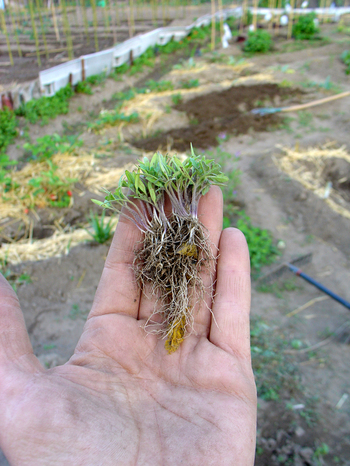
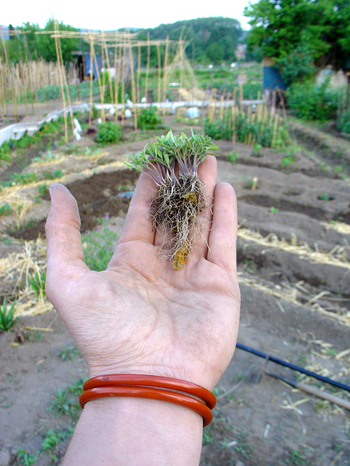
Here's a clump of wild tomato seedlings with the exploded tomato skin still attached to the roots like a busted balloon. They're popping up everywhere in my kitchen garden, and to think I wasted all that time fussing with the foetuses and a propagator when they can grow themselves all by their lonesome. From now on I'm just going to let a few tomatoes dry on the vine and let them dump themselves on the ground. I may just be getting the hang of the Masanobu Fukuoka style of gardening!
These are currant tomatoes, a wild variety that produced zillions of little berry sized fruit and which pretty much scattered itself throughout my kitchen garden end of season. This is the one I use as my 'guest tomato', planted at the ends of the rows so that visitors can have something to nibble on and I can put lingerers to work on an obsessive compulsive harvesting task.
- Wikipedia on Masanobu Fukuoka
- More Masanobu Fukuoka on Seedballs
- Even more Masanobu Fukuoka on Organic dot com
Posted by debra at 10:02 AM | Comments (0) | post to del.icio.us
Love difference,
as in we love difference
April 24, 2006
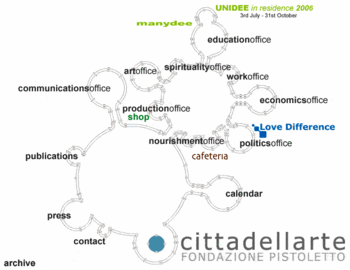
Of course the artistic movement for an intermediterranean politic is into food. And it sports a big fat Citta del Arte logo right on it's homepage. Which led me to click on the Ministry of Nourishment link because I always wonder what folks mean by the word nourishment.
I'm none the wiser, but the Love Difference folks did done organise a Food Market Festival in which food markets (and their organisers) from around the world met this weekend in Turin. I wonder what they've got cookin' for the next event, hopefully something megamaniacal. (Thank you, Julie Upmeyer, who sent this link on time.)
Posted by debra at 08:00 AM | Comments (0) | post to del.icio.us
Locative eating in Overijssel at the end of the Hungry Gap
April 19, 2006
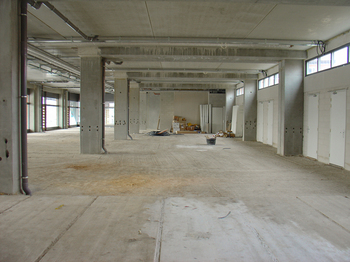
Image of a shopping centre under contruction in Enschede, NL. Soon to be a banquet location
Speaking of starving oneself, although it seems like it's spring, crop-wise we're right in the middle of the Hungry Gap, the period before the spring crops have come in, and when foodstocks stored from fall and winter are beginning to wain and look rather cruddy. Way back in January I wrote about how surprised I was that even though I had let my garden go to pot, there was still more than I could eat growing in the frozen ground. Now that it's no longer necessary to wear two pairs of woolen pants, there's not a lot of calories in my Occitanian kitchen garden.
Back up here in the Polar Circle, the cold weather lingers on and on and I'm in the throes of organising a banquet for ca. 70 people in May, right in the middle of the Hungry Gap (plus 2 cocktail parties, a breakfast and 2 lunches). The occasion is that the Dutch Art Institute where I teach, is hosting a 2 day international symposium titled, Here as the centre of the world (May 23-24, 2006 in Enschede, NL). The subject of the symposium is the position of artists, art initiatives and all their entourage operating at what is considered to be the 'periphery'. The reason that I have been saddled with what I prefer to call the 'art direction' of these feedings, is that I have a big mouth. And a heightened sensitivity for good aesthetics and sustainable practices. And I think that an art institute should set a good example for its students. And I happened to express these sentiments at an organisational meeting.
Often at cultural events in the NL, folks just throw a bunch of fluffy sandwiches smeared with margarine and factory made young cheese on an aluminium platter and call it a day. Although there are clear exceptions to the rule, I just couldn't bear the thought of the bad food jokes from our illustrious guests travelling all the way from Damascus, Beirut, Khartoum and Taipei. Also, as a member of the teaching staff and moderator of at least one of the talks, the thought of 2 days of bad food catapulted me into a state of action. In fact this is the perfect opportunity to investigate the wealth of organic (and organic-enough) produce in and around the easternmost bulge of the Netherlands. I'll be posting about it here.
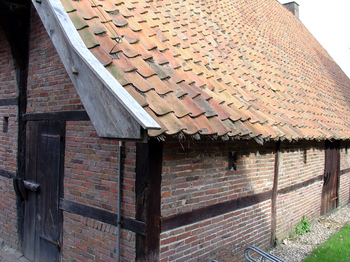
Image of the Los Hoes historical farm building in Enschede, NL. Soon to be breakfast location
This is what I've gleaned so far in terms of promising producers of delicious regional food, beer and wine:
- Vegetables - Boerderij de Ketel / Het Groene Spoor in Rossum will most likely have: spitskool, cauliflower, broccoli, beetroot, carrots, lettuces, pak soy, kohlrabi and potatoes from last year if we're lucky.
http://www.deketel.nl - Vegetables -Landgoedtuinderij De Witte Raaf in Denekamp is hoping to have: spinach, raapstelen, and radishes
http://www.dewitteraafgroente.nl - Fruit - Düvelshöfke in Oldenzaal will not yet have harvested its newest crop of berry fruit. We'll just have to make do with frozen berries (cassis, barberries, gooseberries, blackberries) from last year's crop.
http://www.duvelshofke.nl - Fruit - Fruitboerderij Oold Bleank in Rossum will have some apples and pears left over from the winter. Pity their strawberries won't be in until June.
Oddly, no website - Fruit - De Manderveense Aardbei in Maanderveen won't have any strawberries yet. Maybe some strawberry liqueur?
Strangely, no website - Organic ice cream - Biologisch Roomijs Nieuwe Weme in Weerselo will have plenty of ice cream (vanilla, giandouille, caramel, strawberry) and will likely be able to supply us with dairy products.
- Wine - Hof van Twente in Bentelo has whites and rosés from 2004, even award winners, but the reds are all drunk up. Hungry Gap!
http://www.twentewijn.nl - Beer - Bierbrouwerij Mommeriete in Holthone has a brand new lente bok (spring beer) ready for us. Madame Brewer told me it's like a triple and is even better than last year's. That's how you survive the hungry gap.
http://www.mommeriete.nl - Meat - De Bourgondische boer in Denekamp has very beefy looking Limousin beef for the omnivores. I am an omnivore.
http://www.boergondisch.nl/index1.html
I'm still looking for producers of honey, cheese and a bread if you know of anything.
- A culiblog winter story about abundance
- A culiblog entry about freezing in the spring (don't believe the hype about the South of France)
- Culiblog irrigating and ice skating in February
- The Dutch Art Institute cordially wishes to invite you to Here as the Centre of the World, a conference about all things peripheral.
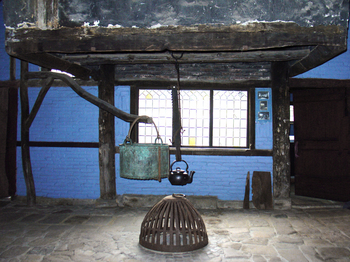
Image of the hearth in the Los Hoes a historical farm building in Enschede, NL. Soon to be a breakfast location.
technorati tags: hungry gap , locative food, Here as the centre of the world
Posted by debra at 08:57 PM | Comments (6) | post to del.icio.us
Episode 1, emergency food distribution and the role of the cameras
March 19, 2006
- This entry refers to food distribution as discussed in yesterday's entry about the World Food Programme's computer game, Food Force.
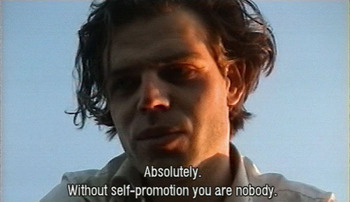
video still from Episode 1, © Renzo Martens
In January 2004, Dutch artist Renzo Martens produced his forty-four minute art film, Episode 1, a documentation of an extensive art performance. Martens travelled to the hottest hot spot war that he could find at the time of making the film (Chechnya, 2002), and in this 'setting' he pointed the camera, not at the war's victims and/or perpetrators like most (news) cameras do, but back upon himself. In Episode 1, Martens asks his Chechen and Russian Federation subjects, 'What do you think about me?'
Enough about you, let's talk about what you think about me.
Martens subjects are the normal cast of characters in every war; heavily armed soldiers on border patrol, civilians lining up for food, civilians trying to get on with it, civilians suffering before their destroyed homes and lives, refugees, but also all manner of NGO employees with their food programmes and journalists with their stories. Within minutes we understand that this is not simply a film about war, but a film about the role of the camera in war, about ethics, the dehumanising effect of pointing the camera and about what is so humanising about turning the camera back around at one's self.
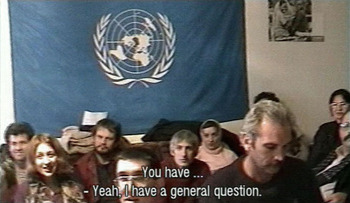
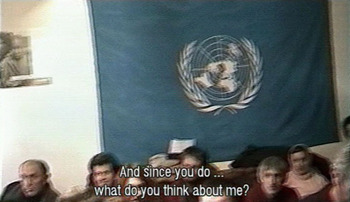
video stills from Episode 1, © Renzo Martens
In the tense environment of a Chechen UN press conference, in territories under fire, the conference moderator asks a group of journalists, NGO employees and UN workers, 'Does anyone have any questions?' Martens pipes up, 'Yes, I have a question!' 'What do you think about me?' Peals of laughter, no one can believe their ears. Ultimatey Martens' question is ignored and the journalists and NGO employees disband to their SUV convoys, rushing off to yet another 'opening' of a milk powder storage facility. Martens interviews the director of the operation, and together they quickly establish the fact that where there are cameras, there can be food relief. No cameras, no aid. In light of this, how could the World Food Programme build its computer game Food Force without even one single PR tier?
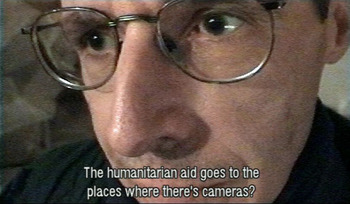
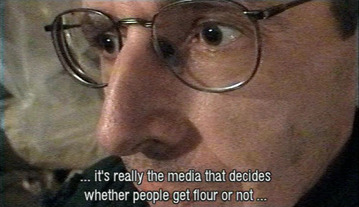
video still from Episode 1, © Renzo Martens
Episode 1 takes us through many such media-laden scenarios. In an open market destroyed no more than thirty minutes ago by Russian Federation soldiers with tanks and heavy artillery, a woman recounts how she and the other market women formed a human shield to halt the execution of a group of Chechen boys. Speaking to the camera, in an oddly well-rehearsed role of who stands where and who says what to the camera, the woman is still shaking from the experience. The scene ends with Martens staring shamefaced at the ground, unable to gather enough gumption to ask her what she thinks of him.
At a food distribution centre, Martens addresses a group of women lined up to receive rations of oil and flour. 'I just want to ask you what you think of me!' and this time there is an answer. The grim situation of lining up to receive basic foodstuffs, fades in the face of humanising laughter and warm sparkling eyes, women just being women. For a moment the food queue has all but disappeared. 'Boy, I think you're handsome, with your blue eyes!' 'What's your theme?' 'Are you a journalist?' 'No, he's an artist.' 'I think he's a journalist.'
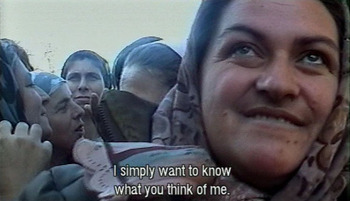
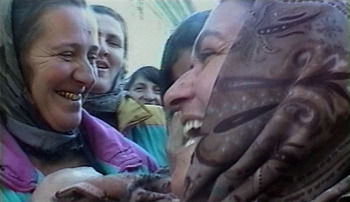
video stills from Episode 1, © Renzo Martens
Ultimately Martens 'act' of showing up with his camera and popping the question brings humanity to every situation that he creates. When he meets a young woman in a refugee camp (who bears an uncanny resemblance to his true love back in Belgium), his question changes, 'How should a man let a woman know that he loves her?' the woman's answer, delivered with beaming smile and sparkling eyes, dissolves the miserable tent landscape and suddenly it's just two people (and their translators) talking about love and life.
Of course Martens created this film for an art context, and the film articulately addresses contemporary art issues. Quite possibly Martens would be appalled that I consider his film to be 'useful', not just for artists and an art public, but as a tool to talk about the causes of war, hunger and the politics of emergency food distribution. And the question that Martens dares to ask amidst flying bullets, UN press conferences, annoyed Russian soldiers, women in food queues and refugees living in tent camps, the initial struggle that it initiates in the interviewee and in me, the audience, as I am simultaneously embarrassed by this question, but know that it is a question that can air-lift all of us actors out of the immediate and into a larger, more important discussion. Complexity is not complicated. Episode 1 brings us to the next tier, where a complex situation can be discussed with the nuance it deserves.
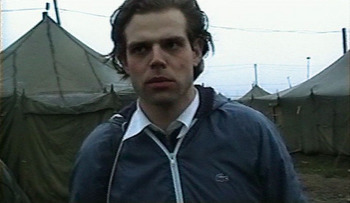
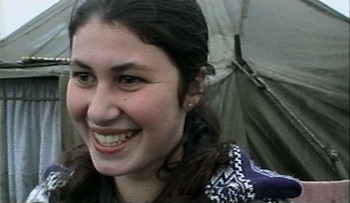
video still from Episode 1, © Renzo Martens
technorati tags: food-related film, Episode 1, Renzo Martens, Chechnya, cinema, emergency food distribution, Food Force
Posted by debra at 11:17 AM | Comments (3) | post to del.icio.us
Food Force computer game: force-feeding inaccurate notions of the causes of hunger
March 17, 2006
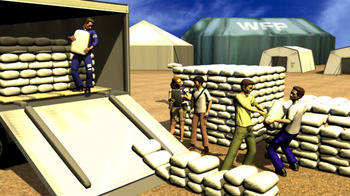
images courtesy of Food Force, © United Nations World Food Programme - all rights reserved
Two weeks ago I sat dumbfounded watching a French TV report in which journalism students practiced reporting a fictional national emergency. I couldn't help but think that what's cool about practice is that it makes perfect. If you practice having enough crises, you might actually get really good at having one! This hackle-raising report about teaching young adults to respond positively to crisis, just didn't seem to me like a simple exercise on getting prepared. The TV experience was absolutely colouring my thinking when I came across the UN's World Food Programme (WFP) website and discovered a new computer game for school kids called 'Food Force'.
'A major crisis has developed in the Indian Ocean, on the island of Sheylan. We're sending in a new team to step up the World Food Programme's presence there and help feed millions of hungry people.'
That's pronounced 'shay-lawn' by the way. The Food Force computer game is essentially a communications campaign of the UN's WFP, cleverly disguised as an educational tool. Although the game really does teach kids about mid-crisis food distribution, its purported goal, teaching students about the causes of hunger, is framed exclusively in the short term and completely ignores all of the long term causes.
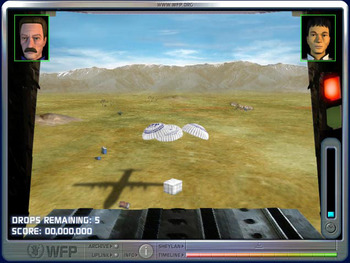
images courtesy of Food Force, © United Nations World Food Programme - all rights reserved
Food Force has six game tiers reflecting the basic elements of emergency food distribution: air surveillance (helicopter reconnaissance, counting clumps of roving refugees), energy packs (achieving nutritional and economic balance from rice, beans, vegetable oil, sugar and iodized salt), food drop (aim and drop those rations), locate and dispatch (Tetris-like global food collection), the food run (choosing the right route through hostile territory), and future farming (dealing with a combination of long term hunger solving factors).
Predictably my favourite game tier was 'future farming', where I was taught that paying people in food to attend job training programmes and so investing in the community, was the straightest path to community self-sufficiency and societal well-being. Together with the food pack nutritional assembly tier, this was the game tier with the highest educational value, going beyond point and drop and mouse dragging I mean racing.
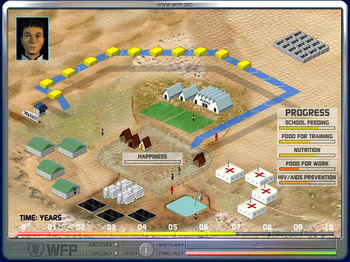
images courtesy of Food Force, © United Nations World Food Programme - all rights reserved
Food Force has a website chock-full with extra video, images and an educational package enabling teachers to work this computer game seamlessly into the curriculum. I pored over the WFP site in search of information addressing what I believe to be the long term causes of hunger and the long-term perspectives on solving the problems. Alas, I could find none. According to Food Force, hunger is caused by drought and civil war.
Of course I find no fault with the WFP's symptomatic relief efforts per se, nor do I see intentional evil with a communication strategy that illustrates this practice to children in the form of a computer game. But I do have a problem with placing this game in a curriculum that teaches children that the cause of hunger is simply drought and war. What are the some of the causes of drought? What are the some of the causes of war? What causes such a lack of food security that climactic fluctuations can take out several million people? Food Force offers no macro vision, and I do find fault with weaning children of the notion that food security is rested in global food politics. The macro vision of many commonly accepted causes of hunger, such as the small farm community-destroying effects of large-scale agricultural practice and the methods of monoculture, are left completely unaddressed by the WFP's computer game.
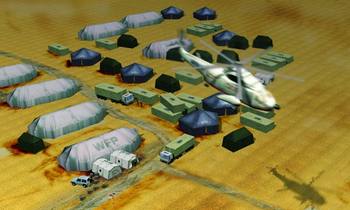
images courtesy of Food Force, © United Nations World Food Programme - all rights reserved
I often wonder if teaching children about hunger couldn't happen in a more nuanced way. Wouldn't it be more productive than training them to throw a little money at the problem? Well, maybe not with the 'throwing a little money at it' method of famine-control being so lucrative.
Tomorrow, I'll give an example of a solution.
I promise.
technorati tags: World Food Programme, Food Force, computer game, emergency food distribution
Posted by debra at 06:26 PM | Comments (2) | post to del.icio.us
How to feel a food mile
September 19, 2005
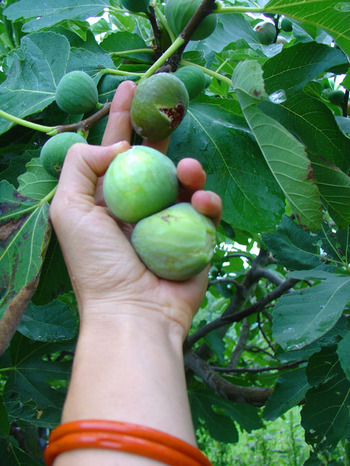
If it takes me eleven days to really feel at home, just imagine how a piece of fruit must feel after travelling under much worse conditions and for a far greater distance! No wonder one must go to great lengths in the urban environment to find tasty fresh food. My head finally adjusted to being here this morning, which makes me think that I would have adjusted faster if I didn't have one.
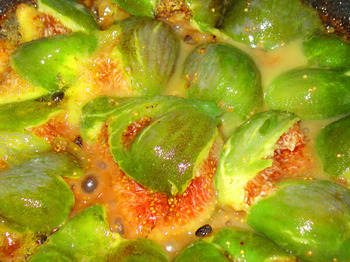
The photos above are of the things that I am missing the most since I've returned to the North. Although the sun does occasionally shine, I've been forced to hide my pedicure de campagne under woolen socks and fabulous boots. Life is one big give and take.
Please read more... "How to feel a food mile"
Posted by debra at 10:00 AM | Comments (1) | post to del.icio.us
French disaster relief local food challenge
September 10, 2005
I should have cancelled heading up north last Wednesday morning when by 6 a.m. I had already made my way across two rivers, almost ruining the treasured Martin Margiëla heels! The bus ride down to Montpellier was spectacular, spectacular meaning that there's something in the scene that can kill you. And although it was in no way on the order of the weather going on across the pond, my return to the Low Country was defined by big Occitanian weather. Curtains of lightening illumniated the pre-dawn Pic St. Loup valley into liver coloured snapshots of wild boar narrowly escaping death by our bus.
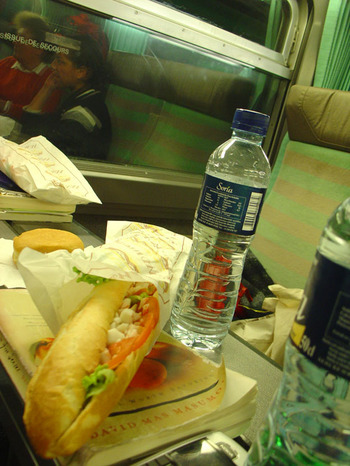
It didn't occur to me that this weather would have any affect on me until we arrived at the transferium Occitanie in Montpellier where the gushing, thundering and lightening took on new proportions. Stuck in a hoard people seeking unavailable shelter, I was quickly soaked down to the innermost microfibres of my culotte and suffered the onset of hypothermia for an hour until summoning the courage to change into my dryest clothes au plein publique. Montpellier was one meter under water and all transportation had been halted until... no one knew.
Please read more... "French disaster relief local food challenge"
Posted by debra at 11:43 AM | Comments (3) | post to del.icio.us
Terrine du terrain
July 15, 2005
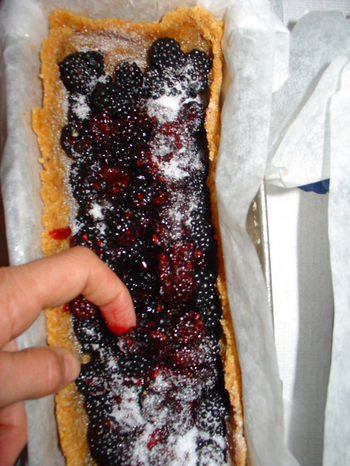
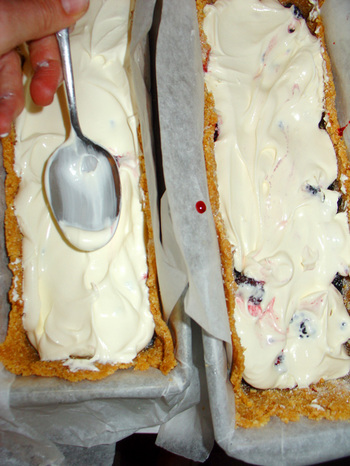
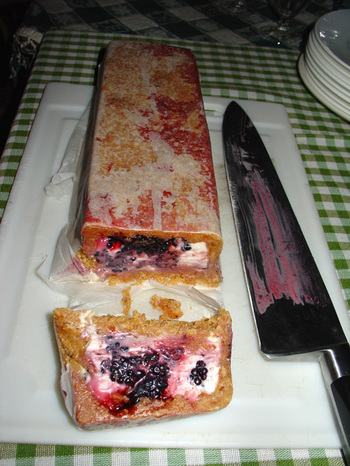
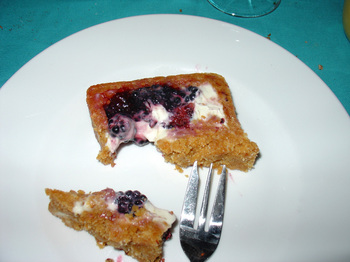
This will be a recipe after the busy party days end. Mille pardons, but I find cooking for 14 and 60 still quite difficult to combine with self-actualisation in other areas of my life, yurt set-up, being a warm friend and hostess, kitchen garden ownership, and going to watch to Tour de France.
Posted by debra at 11:50 AM | Comments (0) | post to del.icio.us
Dear Dad, please get crackin'
July 02, 2005
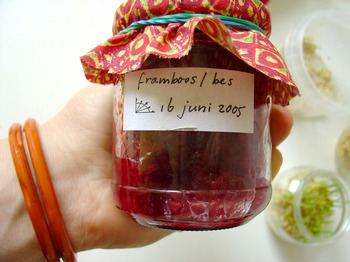
Look what Auntie Kristi made me from the first harvest of her very own garden back in the Old Country. This raspberry/berry jam brought tears to my eyes, so delicious. None too sweet either, just the way I like it. Now there are two people in the world that make me jam that makes my heart leap with joy.
Posted by debra at 01:14 PM | Comments (0) | post to del.icio.us
Fortunately the food was slow and dry
June 10, 2005
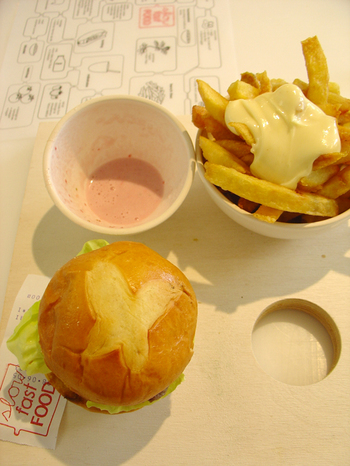
When the 'slow' is the Slow Food Movement and the 'dry' is Dutch design agents Droog Design, the combination of slow and dry is a good thing. In Dutch, droog means 'dry', and it refers to the dry humor of many of their designed objects. Droog is celebrating their Amsterdam Staalstraat location by hosting a temporary 'fastfood' restaurant to showcase their food-related design items (open until Sunday 12.06). The menu is quintessential fast food; burgers, chips, shakes, but all the ingredients are sourced from local ingredients, made by artisanal suppliers and prepared with the love and attention of Slow Food Movement volunteers. I decided to be a lady who lunches and give their grub a try.
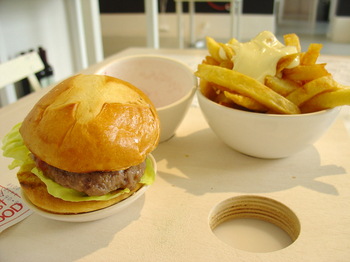
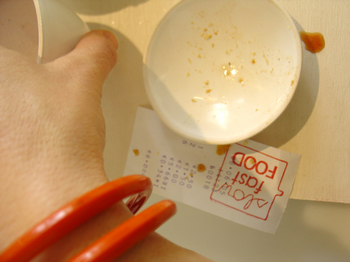
The foodstuffs arrive in round-bottomed ceramic bowls - all of which you may take home with you after eating! The strawberry shake contained a goodly portion of fresh, local strawberries. The burger bun was made from brioche dough, the burger, real chopped all-organic beef, dripping real meat juices! And so the story goes, good ingredients prepared with love from barnyard to burp. The restaurant is primarily about letting folks try out design objects in a real food context so not surprisingly the portions are mini-petit. This sweet and small design choice reminded me of the way Pee Wee Herman used to eat baby corn on TV; kernel for kernel typewriter style! After finishing my slow fastfood lunch, I wasn't hungry but I did have a little hunquering to take home some more of those cute little round-bottomed bowls.
Please read more... "Fortunately the food was slow and dry"
Posted by debra at 12:17 AM | Comments (0) | post to del.icio.us
Strawberry stories
June 09, 2005
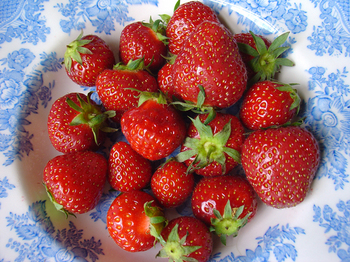
I took home some of those organic strawberries from Brabant last Sunday and by Monday morning I had turned eating strawberries into a yoga breathing practice. Inhale; pop a strumberry in your mouth and squish it against the roof of your mouth with your tongue, wait. Exhale; get high off the strawberry flavour. I got so good at doing this that I could eat one strawberry per breath!
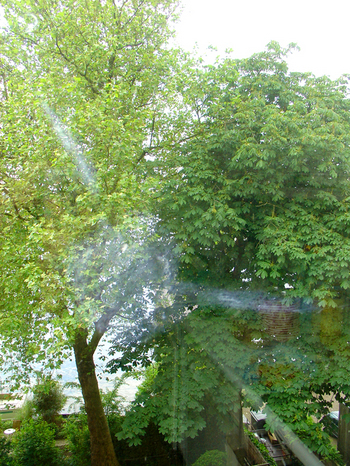
The berries were sitting in a bowl on the counter and I was wandering around the house when all of a sudden I heard a huge BANG coming from the kitchen. (You can see the mark on the window in the image above.) Apparently a bird spied the strawberries and thought, 'mmmmmmmmmmmm breakfast', and smashed headlong into the window! Ouchy!
Normally I don't even like strawberries. They're like tomatoes in that they usually don't taste good unless you grow them yourself, but these strawberries were amazingly aromatic and tastey. Peter, from Artis said that when he went to pick up the two crates at the farmers' market last Sunday, the farmer insisted upon carrying the crates home for him. And so they went, side by side, the farmer proudly displaying the crates of jewel-like strawberries all the way home.
Posted by debra at 09:52 AM | Comments (2) | post to del.icio.us
Art is, art was fluid last Sunday
June 08, 2005
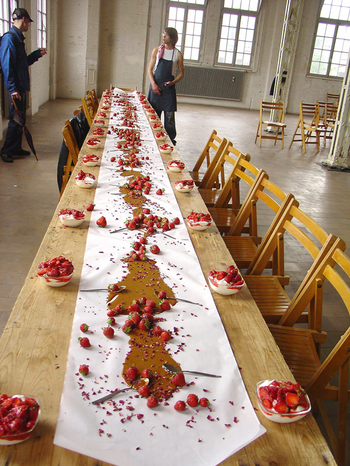
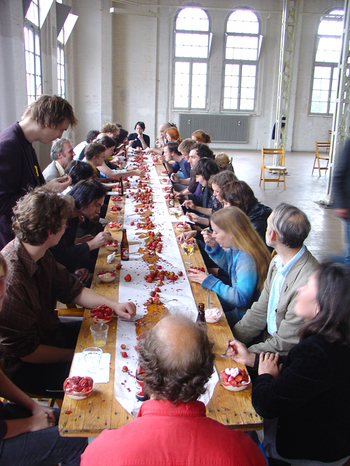
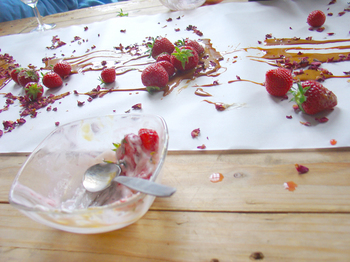
Due to the good company and delightfully engaged audience, artist initiative Artis in Den Bosch showed this Sunday (05.06.2005) that they really know how to throw a happening. Margriet Kemper opened the salon with a presentation of her book, Speak, Image! (unfortunately only in Dutch) in which she talks about how the image is actually a performer. Kemper cited Allan Kaprow, the Daddy of the Happening, explaining to us the choice of the title of the event, Art Fluid.
A.K.: 'I want the line between art and life to be as fluid as possible'.
A presentation of culiblog was next on the menu followed by a breathtaking poetry reading by Robert Gray (AU) and the Dutch translator of Gray's work, Maarten Elzinga. Wafts of rosey caramel in-the-make were the only distraction as both Gray and Elzinga read for the better part of 42 minutes to a rapt audience.
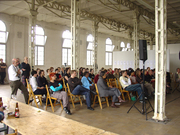
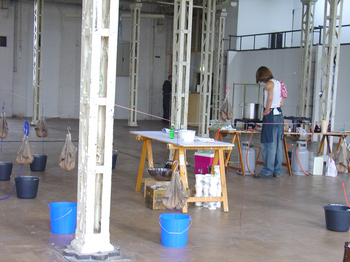
Now there's only so much reflection and interior thought that an audience can take, and just when we thought we would forever be living inside of our heads, the shy noise band, SPASM performed invisibly from the guts of the cavernous gallery. It was just the lightness that the moment needed and everyone started to beam with smiles so broad they barely fit on their faces. Everyone except the young children who ran around annoyed with fingers in their ears.
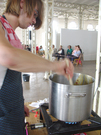
What could be a better follow-up to a poetry reading and a concert of noise than a cookery presentation! Together with my fabulous assistants, Stefano and Kaj, I rejoiced in showing other Dutch people how to make the traditional Dutch 'hang-op'. The hang-op had been dripping whey all the livelong day in linen bags hanging from pink string, defining the space of the kitchen. Stefano removed the linen bags from meathooks and helped Kaj scrape out the 'hung' yogurt from within. Kaj then proceeded to beat to a satiny smooth consistency, the yogurt with rose flavoured whipped cream. I know, it was very, very sexy.
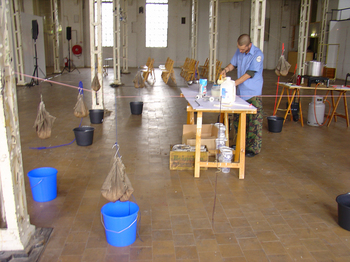
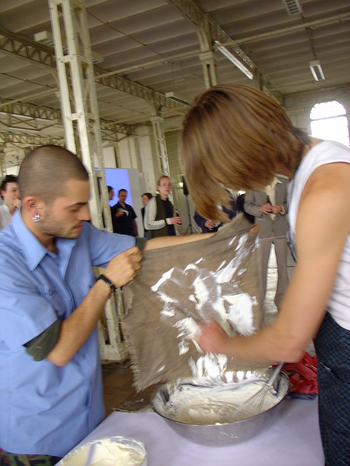
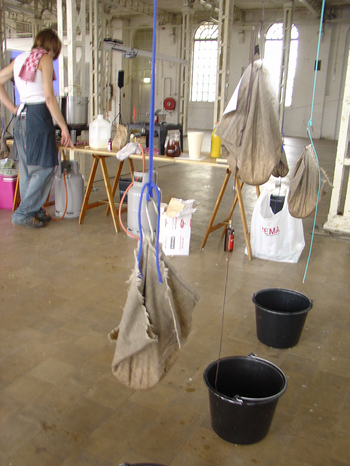
While the audience enjoyed a film by Annika Ström and a presentation of Jan van Toorn's (re)releases from the oldies but goodies of avant-garde sound-art, Kaj and Stefano prepared the banquet table with rose petals, rosey caramel, organic local strawberries and little bowls of hang-op.
Aan tafel, I sort of whispered into the microphone.
Please read more... "Art is, art was fluid last Sunday"
Posted by debra at 09:57 AM | Comments (4) | post to del.icio.us
Brain Food
January 20, 2005
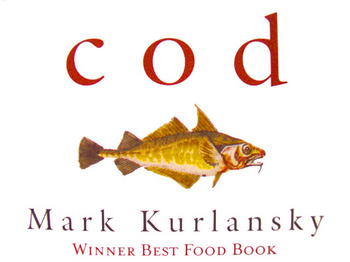
This terribly sad but well written book by Mark Kurlansky is a gripping history from the perspective of the cod. Kurlansky tells how fishing for this gadiform has deeply affected the wealth and development of many nations and technologies. I'm thinking the Flounder by Gunther Grass that I read back in the day but even more I'm thinking Fish Story, the mega-artwork by Allan Sekula, about the 'sweatshop called the Pacific'. (Sekula's visual history Fish Story was part of the the last Documenta XI in Kassel. One photograph in particular gave me goosebumps. You see a ship painter giving the Exxon Valdez a new name...fishy stuff.)
It turns out that cod in the form of stokvis (wind dried cod) turned out to be some good thinking-man's protein for the Norsemen. That extra portable brain-power enabled them to encounter New Foundland in 1000, where they also encountered the Beothuk People who had already discovered it and were not enamoured with the idea of sharing their space with the pink and hairy people from across the puddle.
Basques added salt to the stokvis recipe to make salt cod increasing the quality of the preservation and enabling Basque fishermen to to travel even farther - to the mouth of the St. Lawrence river. When explorer Jacques Cartier got there raring to claim his 'discovery' he encountered almost a thousand Basque fishing vessels. And a bunch of angry native Beothuk people getting pissy about the incessant attention.
Cod is inextricably tied to land (to dry it) and salt (to preserve it) and Salt is in fact the title of another one of Kurlansky's wonderful books.
Posted by debra at 08:54 PM | Comments (3) | post to del.icio.us
Making Roti with Jogendra (play with your food)
December 31, 2004
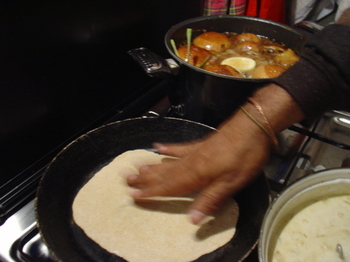
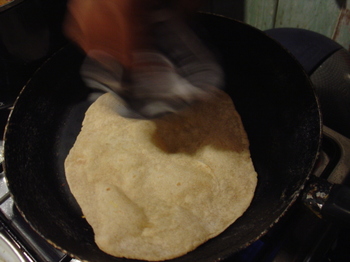
I have my way.
Jogi has his way.
But you can tell by his name that its his birthright to know how to make a better roti.
If you make the roti MY way they puff up like pillows. My way involves a lot of not doing anything and getting the heat right. (Plus you get to use up some of the chicken fat from your ever expanding chicken fat collection.)
If you make rotis Jogi's way, they also puff up like pillows, but you get to play with them constantly and tamp them down with a tea towel, in my opinion the last thing to do to make something puff up. I stand corrected.
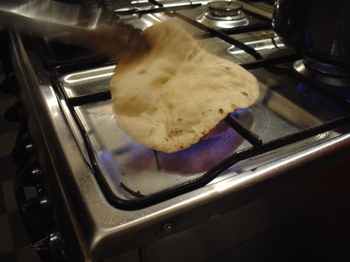
Pictured below is another way to make roti in which you start out in the pan and then dump them right onto the flame. It was a regular Occitanian roti circus tonight.
Posted by debra at 12:51 AM | Comments (2) | post to del.icio.us
Adam is the genuine article...
November 23, 2004
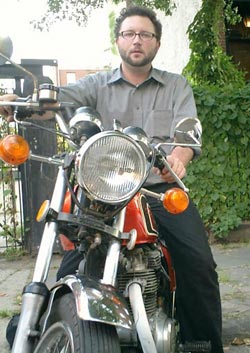
The very attentive Adam Kuban raced over on his, his, (whatever sort of motorcycle he's riding) to assure me that his weblog Slice is purely about offering the best possible pizza fieldguide and not about I-Pod applications, 'not that there's anything wrong with that...'
One lengthy browsie-browse later and I can't argue with him. Kuban has done his homework, meticulously logging it all onto his I-Pod (and generously sharing it with the world). I'd trust him to find me a slice. Take a peak at Slice or read an interview from the Gothamist about Adam. I have other questions that I prefer to ask in private first. ; )
Posted by debra at 12:10 AM | Comments (3) | post to del.icio.us


