








A definitive list? 37 Uses for a Dead Sheep
April 1, 2006
According to the Pamir Kirghiz tribe, this is a list of the 37 (pronounced 35, and possibly 34) things you can do with a (dead) sheep:
1. ayran (yoghurt)
2. qurut (boiled ayran)
3. kurtap (sun dried qurut)
4. susme (thickened ayran mixed with qurut)
5. ajigey (cream heated to thicken)
6. kaymac (cream)
7. byshteq (pressed and cut qurtap?)
8. charity
9. wool
10. milk
11. dung
12. karen (?)
13. meshgeh (?)
14. sari mai (?)
15. nakhtan mai (?)
16. meat
17. leather
18. clothes
19. bedding
20. as money
21. tumaq (hat)
22. takta pos (?)
23. akui (yurt!)
24. kop (?)
25. kurchun (?)
26. kalkma (?)
27. palas (?)
28. bol (?)
29. arkan (?)
30. dung AGAIN!
31. amanat (charity of lent livestock - isn’t that the same as # 8?)
32. toi (birth son sacrifice?)
33. wedding
34. kurban eid (?)
35. when the bride comes (?)
36. military service (?)
debra at 11:40 | Comments (1) | post to del.icio.us
An improbable history: meal assembly centers
March 26, 2006

image of friendly community hugging © Super Suppers, used entirely without permission
Kim Severson and Julia Moskin’s New York Times article about meal assembly centers has me all excited and flapping my wings. For other people. They report on Texan Judie Byrd’s service called Super Suppers, based upon the concept of the communal kitchen.
Here’s how it works: a suburban working person with family goes sans entourage to a central food preparation center where the food is prepped and waiting in a professionally stocked and staffed kitchen. Meandering from station to station (s)he assembles the week’s family meals, takes them home in zip-lock baggies made from compostable potato starch, freezes the meal-sized portions and heats them up when it’s time to get the grits on the table.
What is not to like about this practically utopian idea, for other people? As a predominately self-employed happily not married person with zero children, and as someone who finds almost all elements of food preparation thrilling, I realise this business model was not made with people like me in mind. But because I am insane and live in a bubble, here’s what I’m imagining:
1. The meal assembly center would stock its food exclusively from local farmers and artisanal producers, procuring the highest quality seasonal and local produce at a fair price. The meal assembly center would develop enduring relationships with these folks and the community using the meal assembly center would feel secure knowing that all of the food products they are using are made or grown with their well-being in mind.
2. In a professional kitchen with sharp knives and a seemingly limitless amount of freshly ironed tea towels (made from locally grown hemp), the meal assembly center’s assisting chefs have prepared cooking stations for an interesting range of recipes. This week there are cuts of meat from the local deer cull and some strange root vegetables, next week it’s traditional holiday fare from one of the region’s thirty-seven ethnic groups, the week after that, it’s all about vegan haute cuisine.
Whale washed up on the beach? No problem. The meal assembly center is hip to the community and the kelp is already rinsed. Finally you’re cooking as if you live where you live!
3. It used to be common to take homemade bread dough to a communal bakery for baking. Heq, it used to be common for a lot of people to be involved in the family’s cooking, sharing the workload, but also sharing the how-to and the chit-chat. At the meal assembly center, labour intensive dishes involving lots of stuffing, rolling, stretching and braiding could be prepared by the organisation or by other folks sharing the kitchen with an interest in these dishes. It would be a community that cooks, just like it was way back when, in the Wabac Machine.

image of Peabody and Sherman using the WABAC Machine (that’s pronounced ‘way-back’) © Jay Ward, used entirely without permission
4. The meal assembly center would be stocked with amazing community-tested equipment. Here’s your chance to try cooking on a wood burning stove. Want to smoke up some trout, stuff some sausage, make cheese, brew a stout beer? It’s all possible because the community would do it together.
If you have prepared food (for your family) in a food preparation center, I would really love to hear about your experience. But please do not burst my bubble and tell me it’s about Thai Mac ‘n Cheese and Turkamales.
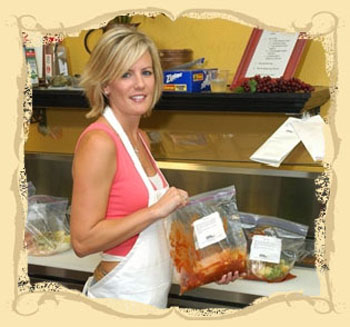
image of zip-lock wielding working yoga mom © Super Suppers, used entirely without permission
- Kim Severson and Julia Moskin’s New York Times article on Super Suppers,food preparation centers
- Super Suppers
- Judie Byrd’s website
- Sara Wilson at Entrepreneur dot com talks about the business concept of Super Suppers
- Peabody’s Improbable History
- A blogger (let’s call him Greg from Life’s a Picnic) writes about his Super Suppers experience.
- Dream Dinners, just another meal assembly center
- Dr. Gurgles doesn’t feel at ease with the concept
- Even more Gurgles from a time long past. Respect to the Gurgling Cod has followed this story in all its New York Times Magazine ugliness from the start.
technorati tags: food preparation centers, meal assembly centers, working moms, locative food, food trend, coommunity
debra at 22:40 | Comments (15) | post to del.icio.us
Not cooking with flowers and leaves, a raw food recipe for marinated shitake mushrooms
March 21, 2006
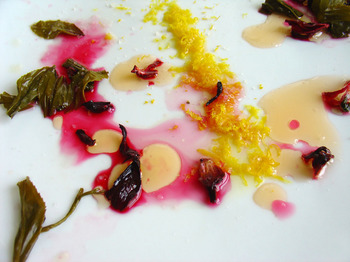
If I want to eat with my friends, I can’t just serve up vegetables with the dirt still clinging to the rootball, the way I like it. I have to engage in some refining.
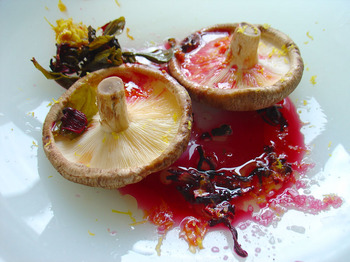
Hibiscus flower and green tea leaf marinated shitake mushrooms
(work: 7 minutes, wait: 1-4 hours)
- dried hibiscus flowers
- whole green tea leaves
- water
- fleur de sel
- lemon zest
- crayfish oil (vegetarians, relax)
- two shitake mushrooms
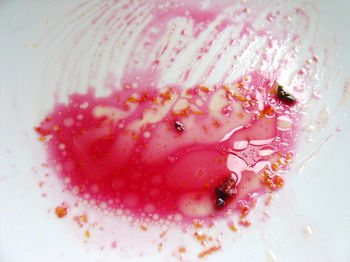
In the bottom of a cup, pour enough hot water to cover a layer of hibiscus flower and green tea leaves. You’re going to make a highly aromatic and concentrated tea, something too strong to sip. Aim at producing four tablespoons.
(This year, hibisicus flowers seem to be my souring agent of choice. I find it hypnotising to watch the magenta colour leach out of the petals, and I just live for the ‘powdery’ aftertaste.)
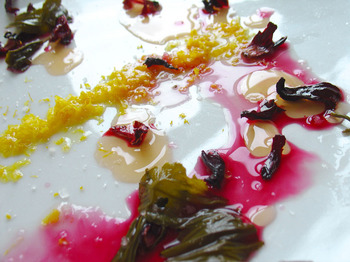
Add to the ‘tea’ a big fluffy pinch of finely zested lemon peel, a goodly amount of fleur de sel, and a teaspoon or two of *crayfish oil.
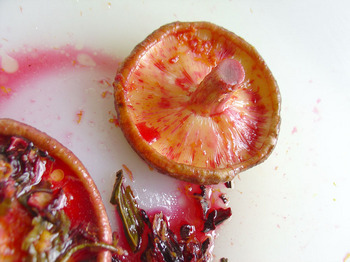
Adjust the marinade and toss around with two large shitake mushrooms. Marinate for one to four hours before serving. Everytime you walk by, just toss the mushrooms lightly for fun.
You can keep the mushrooms for about a day without ruining the texture in or outside of the fridge. The marinade and juices leached out of the mushroom can be ‘recycled’, it’s like bouillion for raw foodies. You know how I love the food recycling!
*A note on crayfish oil: you can’t buy it. Mine was a cadeau made by my friend Marlein, to whom this recipe is dedicated. Possible (vegetarian) substitute: grape seed oil, barely warmed and barely covering half a fennel, star anise and a dried hibiscus petal. Leave to cool and sit for two days. Remove the ’stuff’ and decant to a very clean jar. Store in a cool, dark and dry place.
*A note about using non-vegetarian, non-raw ingredients in this recipe: relax and enjoy delicious foods that have been made for you with love. Aromatic oils are like parfum, you need only a few drops. In this recipe you will need enough drops to fill a teaspoon or two.

Both the green tea leaves and the crayfish oil have a powdery ‘note’ that compliments the woodiness of the shitake. This marinade smells like peonies. Shitake pivoine! My hands are parfumed from the shitake tossing.
The recipe is dedicated to my dear friend Marlein Overakker, a chef who has turned me on to my favourite parfums and who is always a huge source of inspiration.
technorati tags: raw food recipes, vegetarian, shitake, mushrooms, cooking with flowers, cooking with tea, green tea
debra at 14:14 | Comments (9) | post to del.icio.us


