



Pomtajer is the New Cocoyam
a friend of kugel and latke
April 19, 2007
)
Food is synonymous with identity and culture. And in case you hadn’t noticed, cultural identity is all over contemporary art these days. Amsterdam artist and culinary historian Karin Vaneker has been studying the dynamic history of the tropical tuber called the New Cocoyam, aka Pomtajer (say puhm tire).
)
Vaneker is turning visual and experiential research into a most interesting project involving the tuber, famous Dutch Surinamese caterers and chefs (one with a Michelin star), other Michelin starred chefs, yet unstarred food designers and starry-eyed artists. Vaneker has been working in Amsterdam’s multicultural Bijlmer with the Suriname community investigating the origins of recipes using New Cocoyam - in fact a very common ingredient if you’re accustomed to shopping at Tropical food supermarkets. Vaneker has asked a group of us to experiment and develop a new recipes that are an expression of our own culinary heritage and she obviously expects me to produce some Jewish soul food.
(I have something of a reputation ever since my summer borscht brought a famous chef out of a coma. No joke.)
)
Suriname is a former Dutch colony (Dutch Guyana) once inhabitated by Surinen natives, but shortly after visits by Columbus and Vespucci, subjected to a bitter colonial period. From the mid 17th century, the Dutch were setting up sugar plantations for which they imported slaves from West Africa. By 1730 Suriname had 4000 plantations, 400 of which were in the hands of Jewish owners (another academic source wrote 112) and that commanded more than 50.000 West African slaves.
By 1791:
3,790 whites
1,330 Jews
1,760 free non-whites -it is my understanding that many of those were so-called ‘father Jews’
around 50,000 West African Slaves
Happy Passover to You.
Happy Passover to Me.
Happy Passover, the holiday,
When slaves are set Free.
It’s one thing to dive into Jewish potato recipes, it’s another to be confronted with the recipes and dietary laws of religious slave owners. Everybody’s gotta eat, but apparently back in the day in Suriname, a lot of food was still being imported from the Old Country. For the slaveowners this wasn’t much of a problem, but malnourishment amongst the slaves was rife and they began growing native foodstuffs on allotments - mostly underground food like roots and tuber. Fortunately for the slave gardeners these foods were not yet fully embraced by the ruling class, and therefore ignored as agriculture.
)
By 1970 the largest populations in Suriname were the Creoles (former slaves) and the Hindustanis (contract workers imported from India after slavery was abolished in 1863). Hindustanis arriving after the abolition of slavery found it easier to maintain their own culture and to this day, Hindustani-Surinamese cuisine is distinct and considered to be ‘authentically Surinamese’.
West African ancestors, Dutch slave owners, native Indians, the Creoles are enthnically mixed but evidence and ethnic references are traceable in Creole Surinamese cuisine. Apart from the West African, Chinese, Indian and Javanese cuisines, Jewish culinary traditions both Ashkenazic and Sephardic influence Surinamese culinary heritage. The Jewish dietary laws (separation of milk and meat being the most obvious) and the weekly Sabbath (for Jews, not so much for their slaves) facilitated a dispersion of recipes when kitchen staff was taught to prepare specific food in specific ways for pious Jewish families keeping Shabbat. Today, ‘broodje pom’ a layered casserole with pomtajer and chicken is strongly reminiscent of an Ashkenazic potato kugel. For better or for worse, broodje pom is standard Surinamese buffet fare.
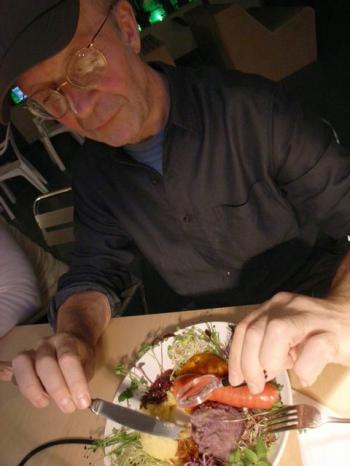
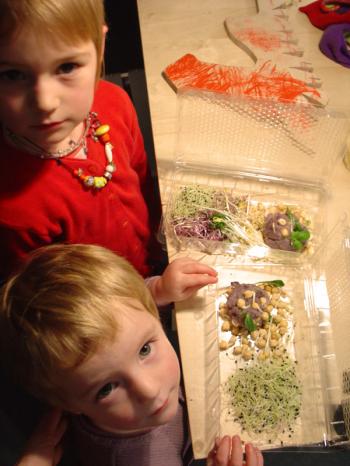
Temporarily laying aside my bias against carbohydrates, I’m experimenting using pomtajer as a substitute for the potato in Jewish recipes. The images of this entry are of my first latkes, potato pancakes/fritters, using pomtajer and bitter herbs, I mean Hungry Gap leafy greens. So far, so delicious, but I’d be really pleased if I could find an actual recipe from a Surinamese Jewish household from the 17th - 20th centuries to give that a whirl. Any suggestions?
)
)
- Wikipedia on Suriname
- Dutch cultural organisation Imagine IC (Identity and Culture)
- Pom op het menu (Dutch language website about Karin Vaneker’s Pom on the Menu project)
- Pom in Nederland (Dutch language website all about pom)
debra at 13:00 | Comments (2) | post to del.icio.us
Passover ultra-lite,
ultra-late,
ultra authentic
April 14, 2007
)
Our first matza ball ever. Don’t believe the hype.
More than half of us had to be at Schiphol Airport the next morning on planes boarding well before 7. We should’ve blown the whole thing off. I mean, isn’t Pesach synonymous with multi-day preparation? To make matters worse, an unfortuitous divorce in our group meant that ‘we’ weren’t invited to the massively gay and elaborately laid seder we usually enjoy so much. Dang.
)
Wig-wearing Reb Tal finds the afikomen.
On April 2nd, in the middle of simultaneous hormonally driven housecleans, we started phoning and texting in the hopes that at least someone had thoughtfully taken it upon themselves to prepare dinner for 7. No such luck. But as the great Yiddish philosopher and Dutch football coach Johan Cruyff once said, ‘Elk nadeel hebt z’n voordeel’ and we decided that we would turn our lack of time, planning and preparation into a hyper-authentic Pesach seder. Our ancestors weren’t busting out the special china the night before, so why should we re-enact labour intensive conventions just because our moms get off on preparing Olympic dinners for 30?
)
Vegetable scrap soup
Anywhoozelbees, we all turned up at 20.00h, grocery bags in hand and set to work preparing the dinner. We made matza ball soup out of vegetable scraps (and instant vegetarian dashi powder), and learned to not believe the hype about matza balls. (You can totally make them on the fly.) We ritually liberated ourselves from the foul burden of eating gefilte fish by changing the main course to pepesan. To our way of thinking, gefilte fish is just Gawd’s way of punishing Ashkenazic Jews. How liberating it is to learn that freedom is just a menu change away.
)
)
Zvoni and Iva prepare Indonesian style gefilte fish
Tal, the youngest, was our fast-reading Hebrew adept and therefore the designated Rebbe. May karmic justice reign down upon us! He didn’t have have enough kipot, so the guys had to don his collection of wigs - whatevs. He also found the afikomen for the very first time in his life and was utterly surprised. I personally don’t approve of the traditional ‘warm’ and ‘cold’ ritual guidance, but we were about to turn into pumpkins as it was well past midnight. Reb Tal wouldn’t continue the reading until he had found that blessed piece of matza.
)
No kipa? No problem. Nenad explores his inner Marilyn
Pesach ultra-lite is definitely worth a repeat and now that we’ve had a taste of it, I’m betting next year’s seder will be faster and lighter yet. The best part of making/celebrating Pesach on the fly? It was the first time we didn’t overeat. No time, planning and prep means you can’t make too much food. Pesach ultra-lite served as an excellent in-your-face reminder of folks running for their lives.
)
Chef and seder hostess, Marlein Overakker
)
Chef Inez de Jongh busts out the bernaise
debra at 13:06 | Comments (0) | post to del.icio.us
Inadvertent
seed collecting
March 27, 2007
)
Nothing going on here…
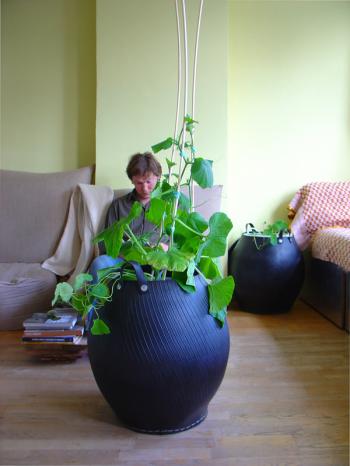
In December a flood swept my vertical gardening experiment clean. The entire wall of calabash was washed away. A tragedy, although that was the extent of the damage and thankfully I’m not a vertical calabash farmer. A close inspection of the dirt revealed that I still had seeds for giving this plant another go.
)
But at closer inspection…
debra at 9:15 | Comments (0) | post to del.icio.us


